
On this day 90 years ago, the Jarrow March began.
The march, which ran from the 5th-31st of October 1936, was an organised protest aiming to draw attention to the high levels of poverty and unemployment in Jarrow at the time. 200 marchers set out from Jarrow to London, taking with them a petition to Parliament. This petition requested that “His Majesty’s Government and this honourable House should realise the urgent need that work should be provided for the town without further delay.” The town’s main employer, Palmer’s Shipyard, had closed in 1934. The petition had 12,000 signatures. A group of blind veterans also accompanied the march to demand better support for blind individuals.

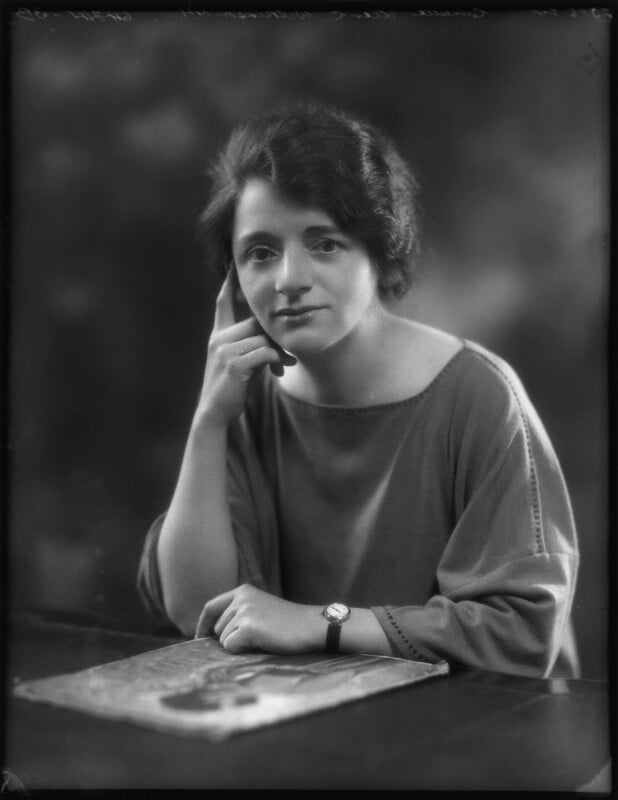
A mouth organ band boosted morale throughout the 25-day march until the protesters arrived in London on the 31st of October. Councillor David Riley was the marshall for the march. Ellen Wilkinson, MP for Jarrow, joined the march whenever her commitments allowed and presented their petition to Parliament. She even led some songs along the way.
All of the political parties gave their support to the march when it set off on the 5th of October, aiming to reach London for the start of the new Parliamentary session on the 3rd of November. Relays of medical students accompanied the march as medical attendants. A fund was established to meet the cost of the march, with a target of £800. In the end, they raised nearly double this amount both in the local area and at stops along the route.

Throughout the journey the marchers covered a distance of around 291 miles. They received welcome and support at different stops throughout the march. For example, at Leicester bootmakers from the Co-operative Society worked through the night without pay to repair the marchers’ boots.
The petition was presented by Ellen Wilkinson to Parliament but not debated, and the marchers went home believing that their efforts had been unsuccessful. However, today we recognise that the march had an impact. It is because of the Jarrow March and similar protests that attitudes began to change, paving the way for social reform following the Second World War.
Regardless, it is a significant event in Jarrow’s history, particularly its industrial heritage. It remains in the consciousness of the people of Jarrow, and is commemorated in artwork and sculpture throughout the town.
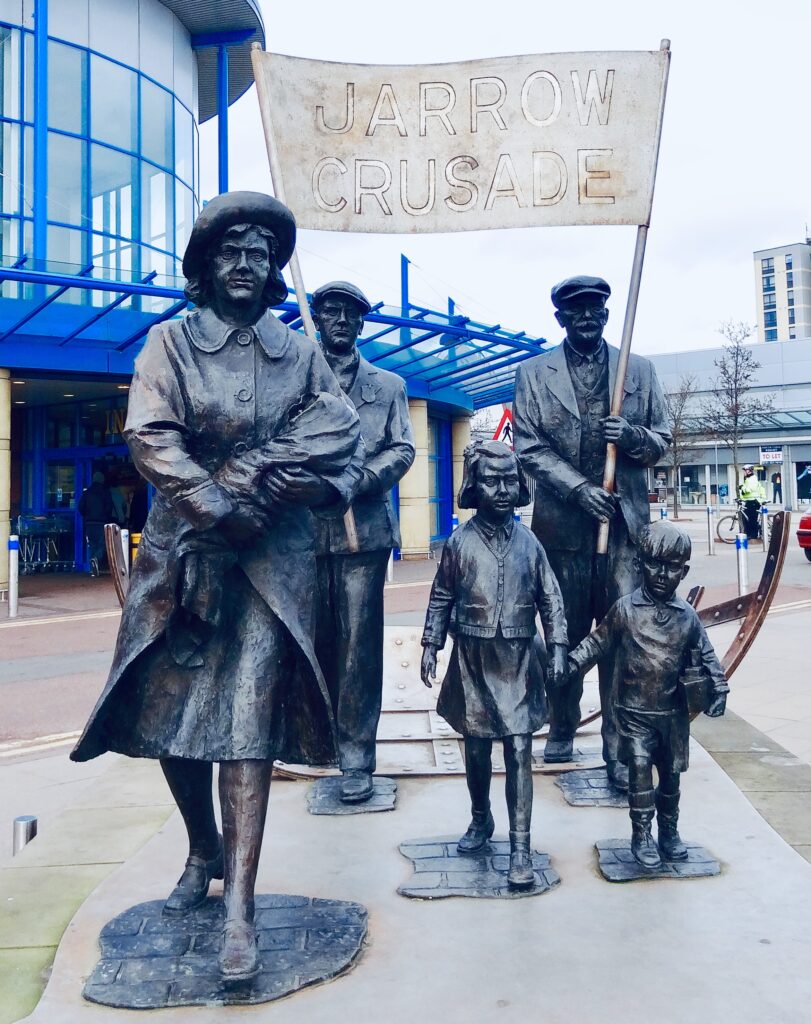
The Spirit of Jarrow sculpture commemorating the Jarrow March by sculptor Graham Ibbeson. Picture by John K Thorne. Public Domain