
International Women’s Day might be over, but March is still Women’s History Month. So we decided to keep the ball rolling and talk about some important women in archaeology and heritage. These are just a few – there are so many more we could name. Women have contributed in so many ways to preserving our history, just as the women working at Jarrow Hall today do to preserve both our history and our environment.
Ennigaldi-Nanna
Did you know that the very first known museum was created by a woman? Our first woman in heritage is Ennigaldi-Nanna, also known as Bel-Shalti-Nanna or simply Ennigaldi. She was a princess of the Neo-Babylonian empire and a high priestess of Ur. Ur was in modern day Iraq.
Ennigaldi’s father, King Nabodinus, was an antiquarian and is often thought of as the first archaeologist. It seems a love of ancient artifacts and history was a family affair!
Ennigaldi founded a museum in Ur around 530 BC. This is often considered the first public museum and was curated by Ennigaldi. She may have also excavated some of the objects herself. Others were excavated or collected by her father and others.
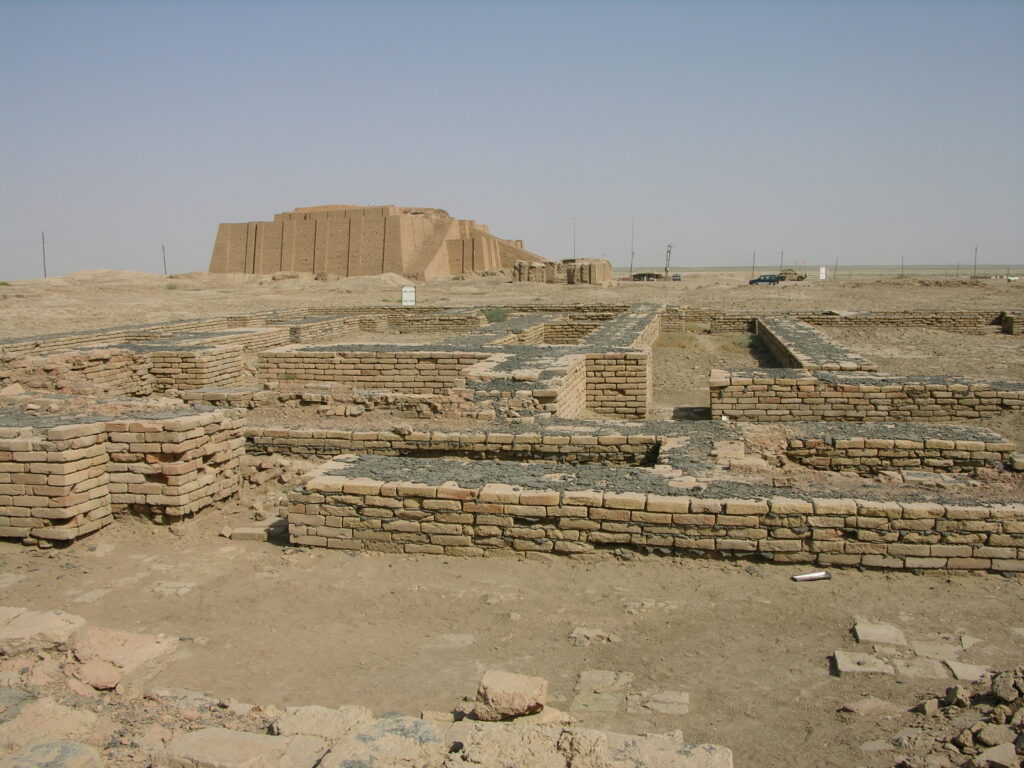

M.Lubinski from Iraq,USA., CC BY-SA 2.0, via Wikimedia Commons
Ennigaldi used the objects in the museum, some of them from as early as the 20th century BCE, to explain and interpret the history and heritage of the area. She included labels, written on clay cylinders with text in three languages. She was probably responsible for labelling and cataloguing the objects herself. Ennigaldi even developed a research program around the collection of artefacts!
Her museum probably closed around 500 BC at the latest. The city of Ur was no longer lived in by the early 5th century BC because of changing climate conditions, including drought. We do not know what became of Ennigaldi after her museum closed, but the remains of her museum were excavated in 1925 by archaeologists Leonard and Kathleen Woolley. Because of the neatly arranged and labelled artefacts, they instantly recognised the site as a museum, founded 2500 years ago.
Pamphile of Epidaurus
Pamphile of Epidaurus lived in Greece in the 1st century AD. She is likely to have been of Egyptian descent. Pamphile was a historian and, in fact, is one of the first known female historians. She is best known for her Historical Commentaries, which was a collection of historical anecdotes written over 33 books. This work is lost to us, with only ten fragments surviving quoted by other authors. However, other Roman historians seem to have found the work very useful and quoted it extensively in their own work.
The Byzantine writer Photios writes that Pamphile worked constantly on her writing, recording what she read herself and what she discovered from learned visitors to her home. She was the author of many works aside from her Historical Commentaries. It has been suggested that she might be the author of the Treatise on Women Famous in War. This was an account of the lives of fourteen famous women.
Ban Zhao
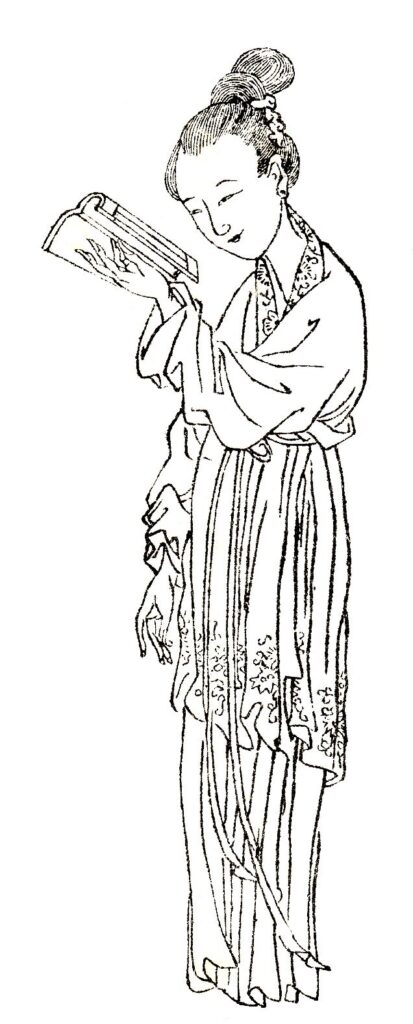
Ban Zhao was born in around 45 or 49 AD. She is another of the first known female historians. She was also a philosopher and a poet and had great interest in astronomy and mathematics.
Ban Zhao’s husband died when she was young and she never remarried. She decided to devote her life to scholarship. She taught members of the court in the royal library and was a librarian herself at court. Ban Zhao also trained other scholars.
As librarian, she rearranged and enlarged Liu Xiang’s Biographies of Eminent Women. However, she is most famous for her contribution to the completion and transmission of the Book of Han. This was an official work about the history of the Western Han. She completed her brother Ban Gu’s work on this text after he was imprisoned and died.
Ban Zhao died in 120 AD.
Isabella d’Este
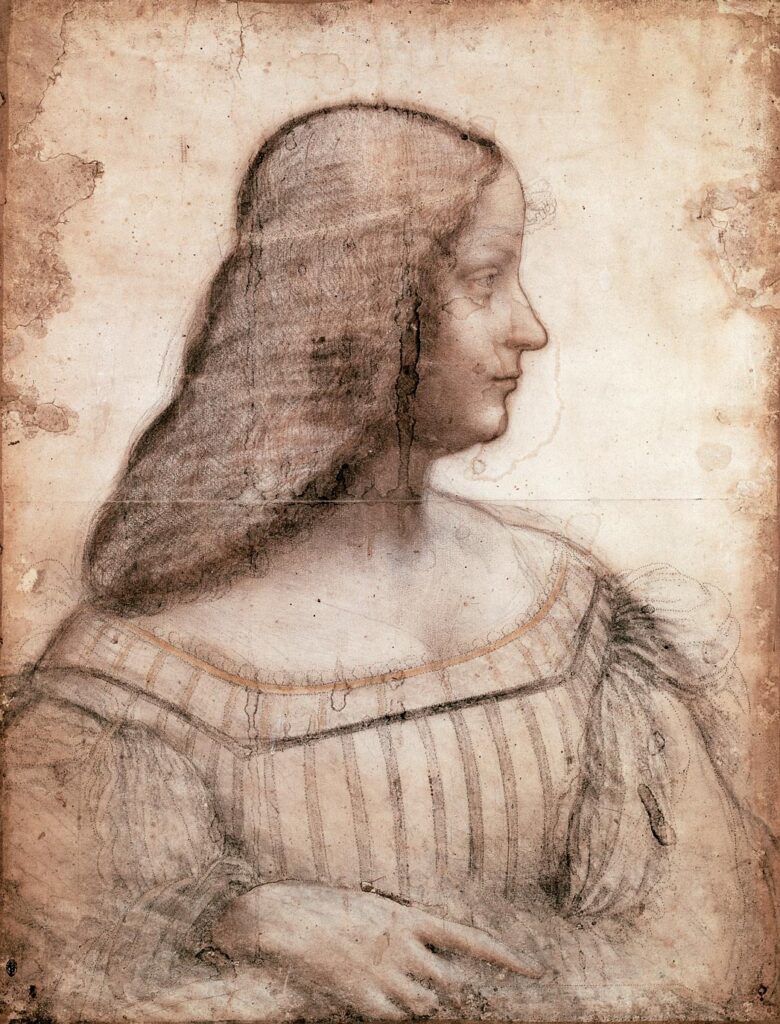
Isabella d’Este was born on the 19th of May 1474. She became one of the most important patrons of the arts during the Italian Renaissance.
She was also the Marchioness of Mantua and excelled in politics. The diplomat Niccolò da Correggio even named her ‘First Lady of the World’. When her husband was captured in 1509, she took control of the military forces of Mantua herself and held off invaders until he was released three years later. She was a very competent ruler. When her husband returned and heard of this, he was furious at her perhaps superior political ability. Their marriage broke down and Isabella lived independently of him until his death in 1519.
As a patron of the arts she commissioned many famous painters of the time, including Leonardo da Vinci, Raphael and Titian. She also commissioned Michaelangelo as a sculptor. She also commissioned musicians and architects and was in contact with many writers. Isabella even collected ancient Roman art.
She died on the 13th of February 1539.
Catherine Downes
Catherine Downes was an 18th century English antiquarian and archaeologist. She was one of the first women antiquarians to excavate a Roman site and one of the first recorded women to contribute to the work of the Society of Antiquaries of London.
Catherine excavated the Pit Mead Roman villa in Wiltshire in 1786. Excavations revealed a bathhouse, four mosaics and several archaeological finds. Downes illustrated the mosaics as well as finds from the villa. Her descriptions of the finds show she was aware of early archaeological principles and practice.
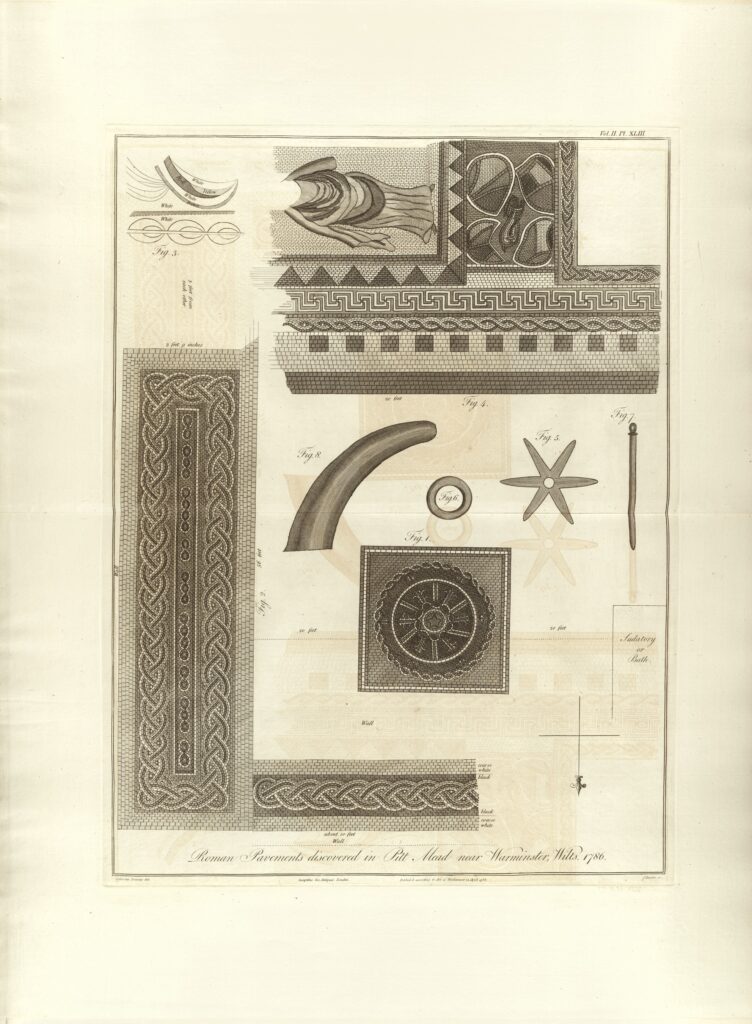
Catherine shared the results of the excavation with the Society of Antiquaries of London in 1788. Her work contributed to English archaeology, which at the time was still a new discipline.
Many More Pioneering Women!
There are many more pioneering female archaeologists and women in heritage to talk about, so here are just a few!
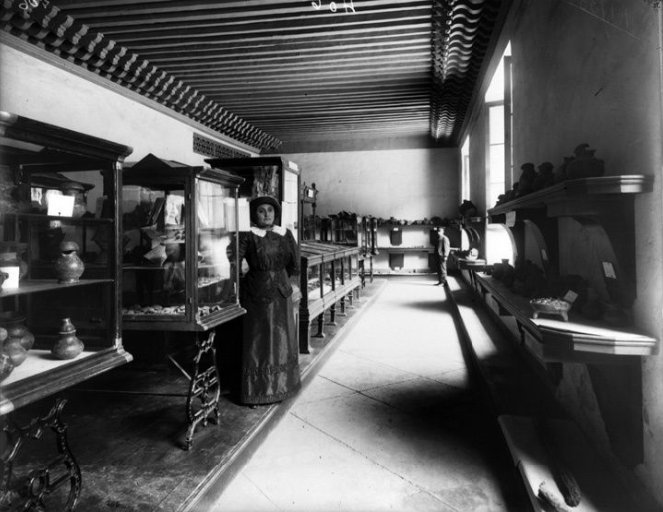
CC BY-NC-ND 4.0
Isabel Ramírez Castañeda (1881-1943) was one of the first Mexican female archaeologists. She also carried out the first excavation led by a woman in Mexico. In 1906 she won a scholarship to study archaeology, history and ethnology at the National Museum of Anthropology in Mexico. There she studied the folklore of the Nahua people of central Mexico and classified lots of the archaeological objects. Isabel was a speaker of the Nahuatl language and compiled Indigenous stories and myths. Anthropologist Franz Boas published three of of the folktales she complied and translated without acknowledging her as the author. She died in 1943.
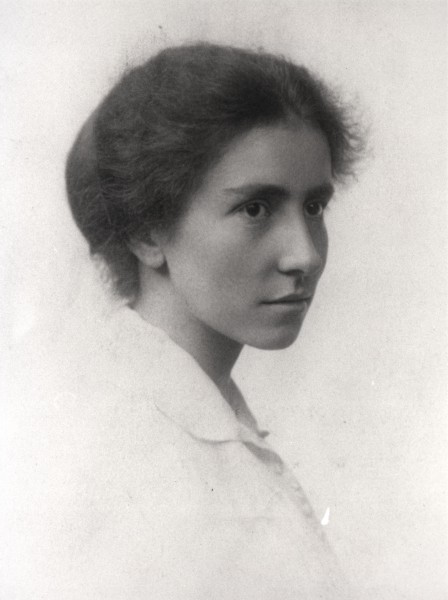
Dorothy Garrod (1892 – 1968) was an English archaeologist. She specialised in prehistory. Dorothy became the Disney Professor of Archaeology at the University of Cambridge in 1939. She held this role until 1952. Dorothy was the first woman to hold a chair at either Oxford or Cambridge. However, as a woman she could not be a full member of the university or speak or vote on university matters until 1948. Dorothy led internationally recognised excavations and introduced a module on world prehistory at Cambridge. Therefore, she expanded the study of prehistory from being mainly European in focus to a more global scale. She died in 1968.
Fayza Haikal was born in 1938 and was the first Egyptian woman to earn a PhD in Egyptology. She worked on the UNESCO campaign in Nubia to protect monuments put at risk by the construction of the Aswan Dam. Fayza studied in the UK from 1961 to 1965. At University College London, she asked her supervisor, W.B. Emery, to join his team to work in Nubia and was told “I don’t take girls in my team.” She then transferred to Oxford University where she earned her PhD. Fayza directed a project to protect archaeological sites threatened by construction in Sinai. In 1988, she became the first female president of the International Association of Egyptologists. She is almost 88 years old.
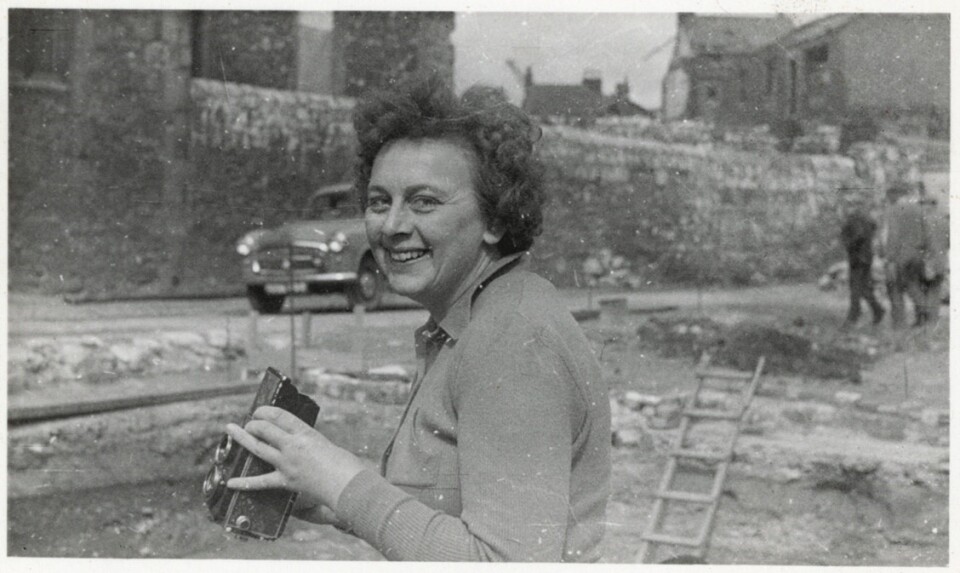
Finally, we have Dame Professor Rosemary Cramp! Rosemary was born in 1929. She was a pioneering archaeologist who specialised in the Anglo-Saxon period. She was the first female professor at Durham University and in 1956 she and Eric Birley co-founded the Department of Archaeology. Rosemary was head of the Department of Archaeology from 1971 until 1990. She was also a member of the Royal Commission on the Ancient and Historical Monuments of Scotland and a member of what became Historic England. She was president of the Society of Antiquaries of London from 2001 to 2004. Rosemary led the excavations at Wearmouth and Jarrow which gave us the incredible collections we display today in our museum. In addition, she developed the first comprehensive catalogue of 7th-11th century stone sculpture. Rosemary died on the 27th of April 2023 at the age of 93.
We owe so much to the work of women in heritage, helping to preserve history and knowledge for future generations. We hope to inspire everyone who visits us here at Jarrow Hall so that everyone feels that can achieve their dreams.