
On this day in 1054 AD, Northumbrian forces defeated King Macbeth of Scotland in battle at Dunsinane.
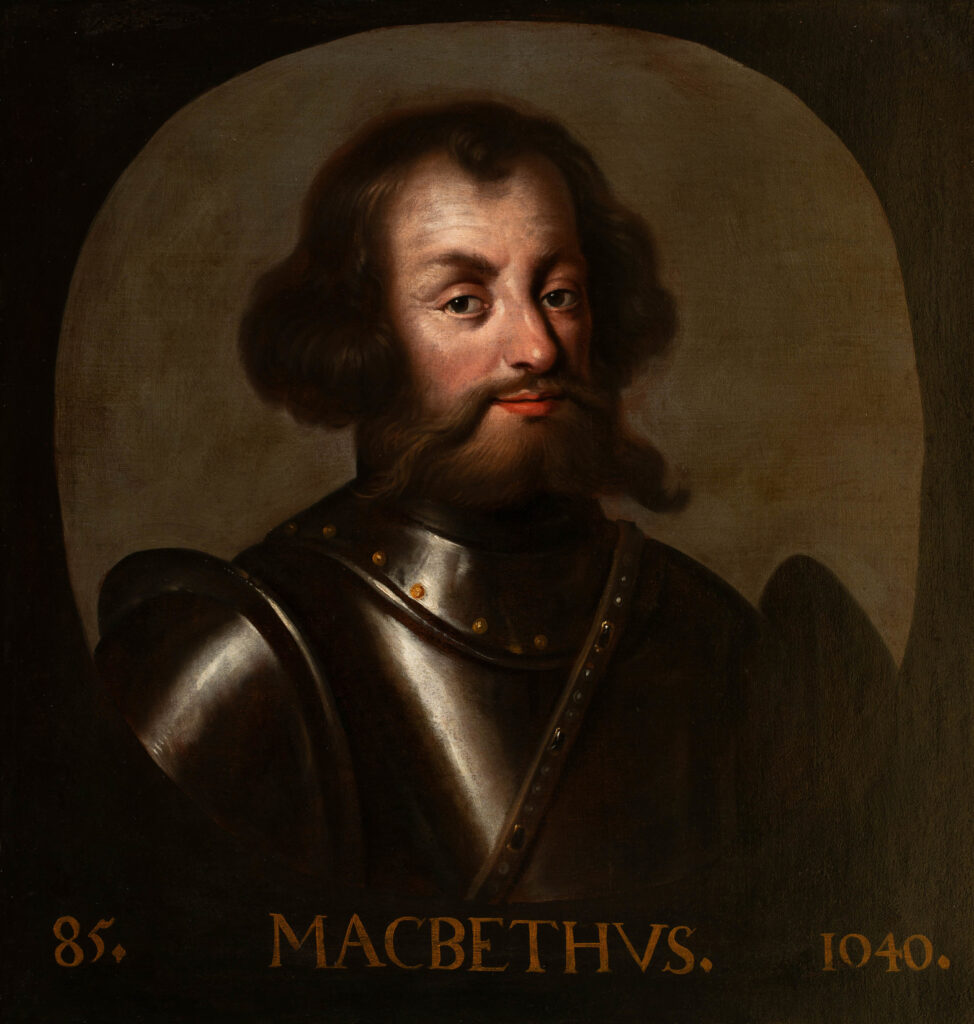
Yes, that Macbeth. Of Shakespeare fame. “Double, double toil and trouble” and “Is this a dagger I see before me?” fame. Though his story was not perhaps as we know it from Shakespeare’s atmospheric tale.
Macbethad mac Findláech, often anglicised today as Macbeth MacFinlay, was King of Scotland from 1040 AD until his death in 1057 AD. He was also known as the Red King.
He killed King Duncan I in battle after Duncan launched an attack into Moray, of which Macbeth was earl, in 1040 AD. Duncan was possibly Macbeth’s cousin. Macbeth took the throne of Scotland on the 12th of August 1040. Duncan was not elderly, nor did Macbeth murder him while Duncan was a guest in his home as in Shakespeare’s tale.
Macbeth of Scotland by Jacob Jacobsz de Wet II, Royal Collection, public domain via WIkimedia Commons
Despite what Shakespeare’s story might have you believe, most sources describe the Red King and his reign neutrally, if not positively. By all accounts, it was a time of stability and plenty for the people of Scotland.
In 1052 AD, Macbeth received Norman exiles in his court. This put him in the middle of tensions in England between Godwin, Earl of Wessex and Edward the Confessor. Earl Siward of Northumbria invaded Scotland in 1054 AD on behalf of Edward the Confessor.
As in Shakespeare’s fictionalised telling, there was a battle at Dunsinane on the 27th of July 1054. Macbeth fought the Northumbrian forces but they defeated him. Siward’s son was killed and so Tostig Godwinson, Harold Godwinson’s brother, became Earl of Northumbria.
This had an impact on the events that would culminate in the Battle of Hastings in 1066. After his eventual exile by his brother Harold, Tostig allied himself with Harold Hardrada in his challenge for the throne of England.
The Red King died at the Battle of Lumphanan in 1057 after a fatal wound from Duncan I’s son, Malcolm. He would become Malcolm III.