
We want to highlight some fantastic research by one of our volunteers, Kieran. Kieran has been volunteering with us for over a year now in collections. Kieran does a lot of behind the scenes work helping us to document all of our objects – but recently, he asked to do some research for us. Of course, the answer was yes!
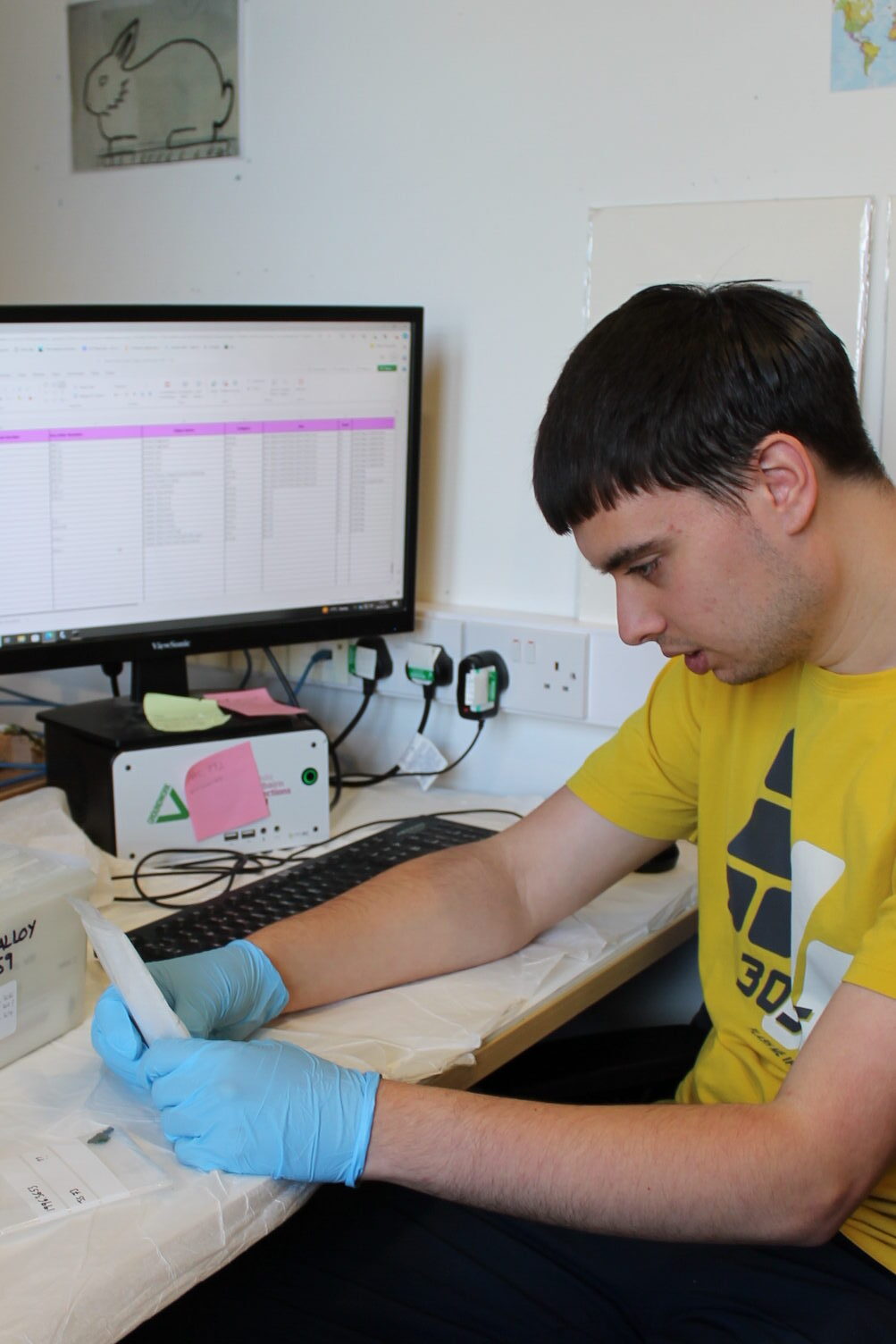
So we gave Kieran free rein to choose what he wanted to research from our objects on display or in our store. He choose to research keys! So without further ado, let’s share Kieran’s research into some of our objects.
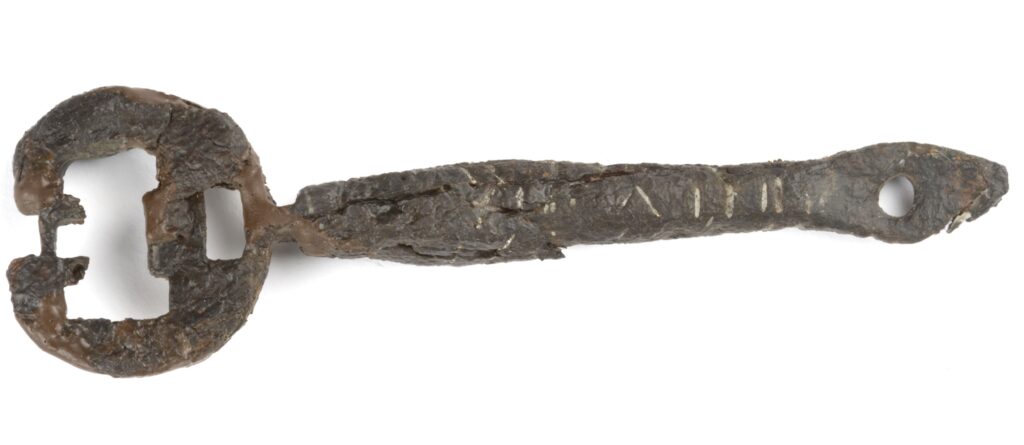
Firstly, this iron key dates to the 11th-13th centuries and has a geometric pattern decorating it. It seems that it may be a slide key, designed to slide through internal springs or tumblers within a lock. There is a loop at the end, which may have been to tie or suspend the key to make sure its owner didn’t lose it. It was for a barrel-shaped padlock that could have been attached to doors and gates to caskets and chests. This key is of Goodall Type C.
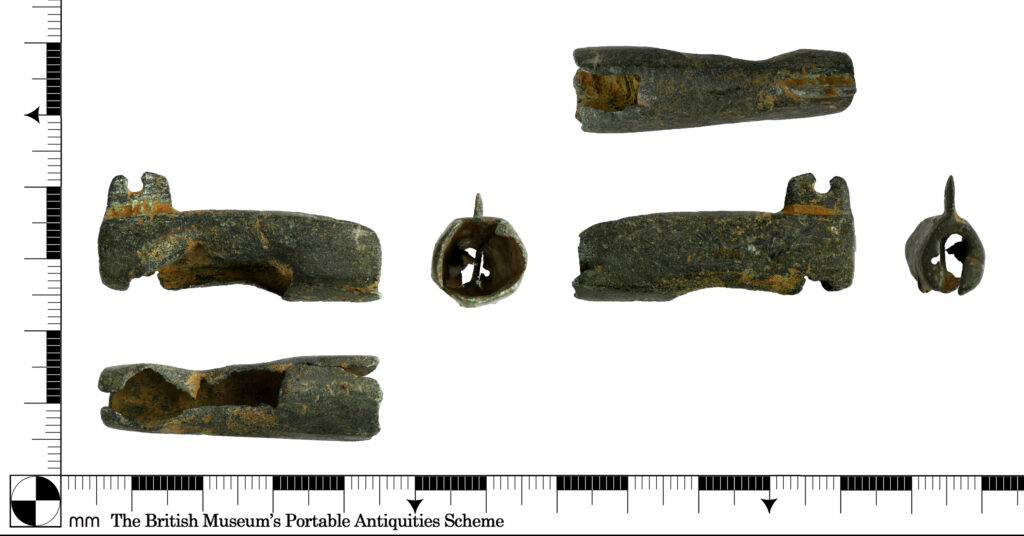
The barrel padlock above is something like what this key would have unlocked. It is from Surrey and dates from roughly the 12th to the 14th centuries.
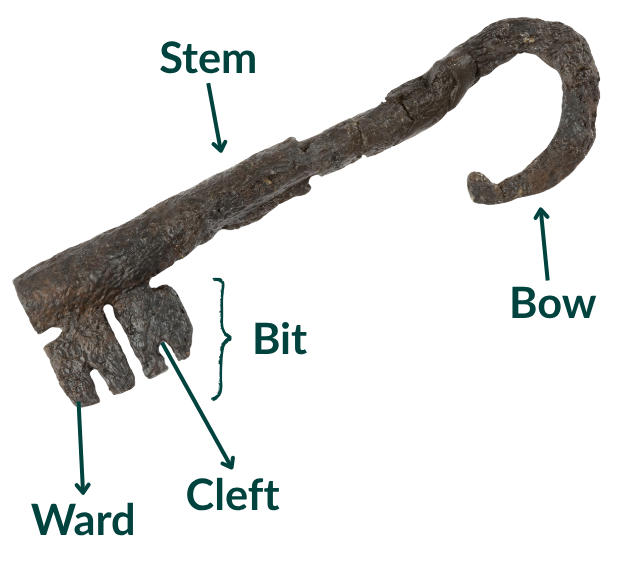
This iron door key dates to after the Norman conquest in the 11th century. We also added labels to show the different parts of a key. This key has a hollow stem which has been rolled in one with the bit, which would suggest that it may be of Goodall Type 3. This is a rotary key – you turn these keys in order to lift tumblers and levers or push springs.
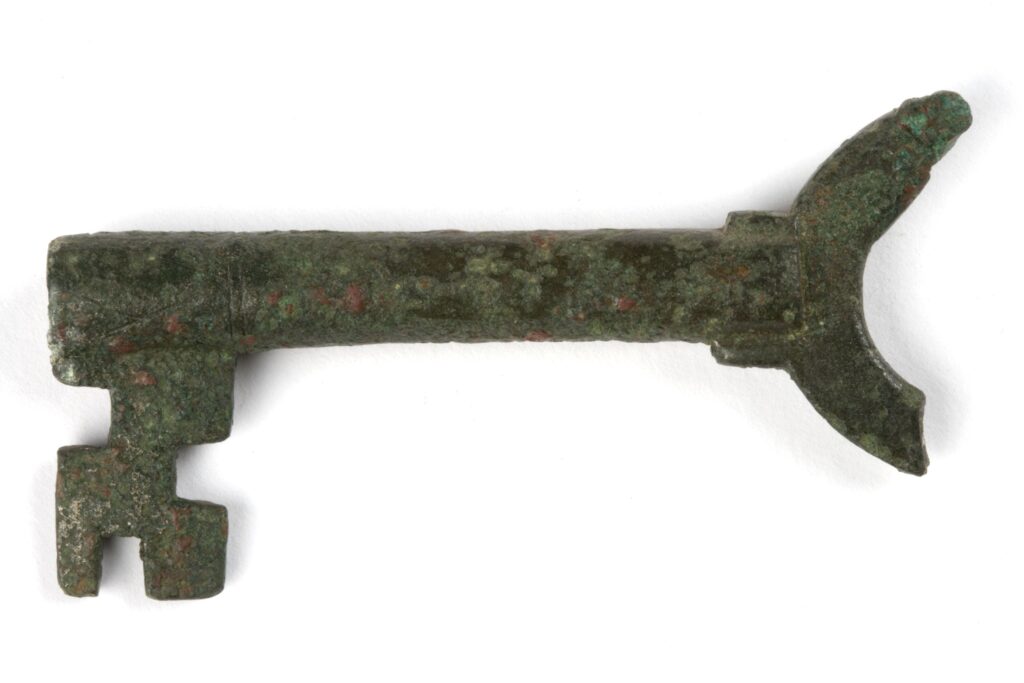
This copper alloy key is also a rotary key, though it is quite small. It would lock and unlock a mounted lock, which might have been on a door, box or chest. It appears to be of Goodall Type 4.
We wonder who used these keys and what for – we can’t help but wonder who might have used them and what was precious enough to them to lock away. We hope you’ve enjoyed Kieran’s research! It is always exciting to learn about and investigate our collections.
We leave you with another key – this one is a 3D model of a very special object, a key finger ring from the late Anglo-Saxon or early medieval period. This would have likely been used for locking a box or a chest.
Thank you for reading! Until next time.