
It’s been a busy week at Jarrow Hall as we prepare for Ostara. If you visited over the weekend, you might even have taken part in our golden egg hunt. The JAM Fam has been just as busy with our own kind of whimsical merry making: detailed pottery analysis.
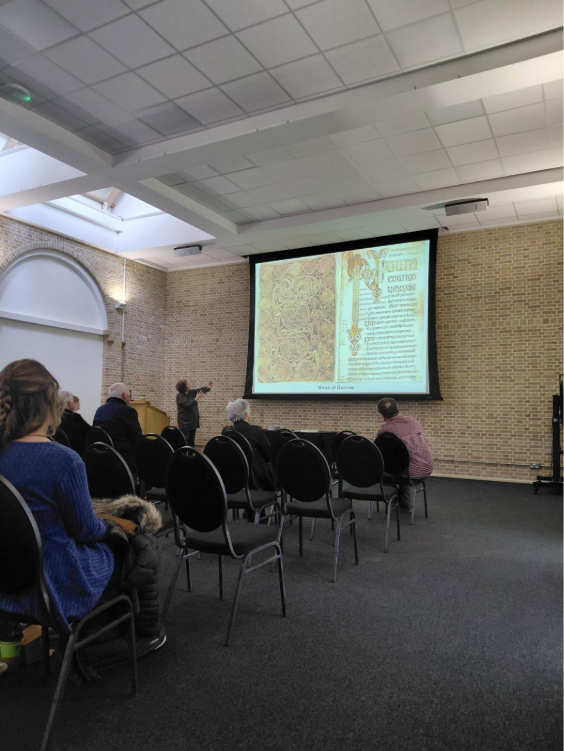
But before we get into all that, we would like to give a very big thank you to Professor Michelle Brown for being this month’s speaker at our second JAM Lecture. She took us on a whirlwind tour of the world of medieval manuscripts; exploring the lives and motivations of the people who made and used them, the rich detail of pictorial storytelling, and the economies that supported and influenced manuscript making both locally and internationally.
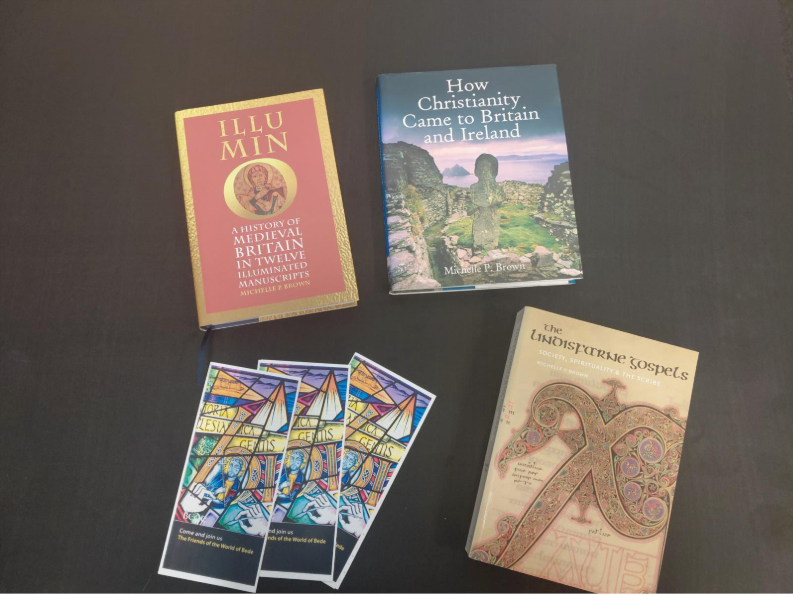
And for anyone who might be interested, copies of some of Michelle’s books are available for purchase in the Jarrow Hall Museum Giftshop.
And now the pottery.
Having cut our teeth on the clay pipes, it’s now time for the team to try our hands at making a chronology of our pottery. We started with clay pipes as overall there’s less of it in the collection, making it a less overwhelming start. Additionally, when Mr. Robert Sinclair of Blenheim Street, Newcastle-upon-Tyne decided to stamp his name right on the side of the pipe; it does make it a bit easier to figure out where, when and by who a pipe was made.
Pottery, on the other hand, can be a bit trickier. Many of the modern examples in our collection do have makers stamps on their basses. This usually tells us the studio, and sometimes the specific person who made them. However, this is not true of all the pottery sherds we have, as some of it comes from a ‘non-diagnostic’ portion of a vessel, while modern mass produced and ancient handmade pottery tends not to have a makers stamp at all.
We started by separating our pottery into ‘Diagnostic’ and ‘Non-Diagnostic’. Diagnostic pottery sherds are pieces from a base or rim, or sherds with particular identifying features such as a stamp or other decoration. Non-diagnostic means everything else; sherds of plain, unmarked pottery which doesn’t tell us much about the type of vessel they came from.
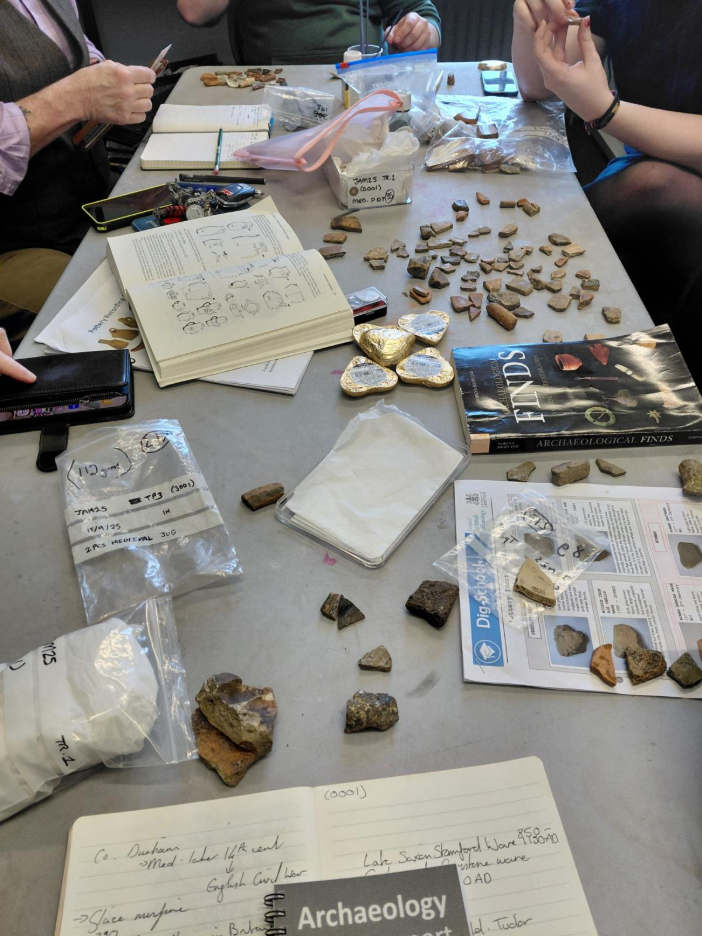
We also seperated them roughly into types and ages; Medieval, Post-Medieval, Coarse wear, Transfer Printed etc. These are broad categories which are easy to distinguish between, so don’t require too much expert analysis.
Now it’s time to get technical. By comparing the sherds present in our collection with existing British pottery typologies we’re able to narrow down dates, uses, material and even places of origin.
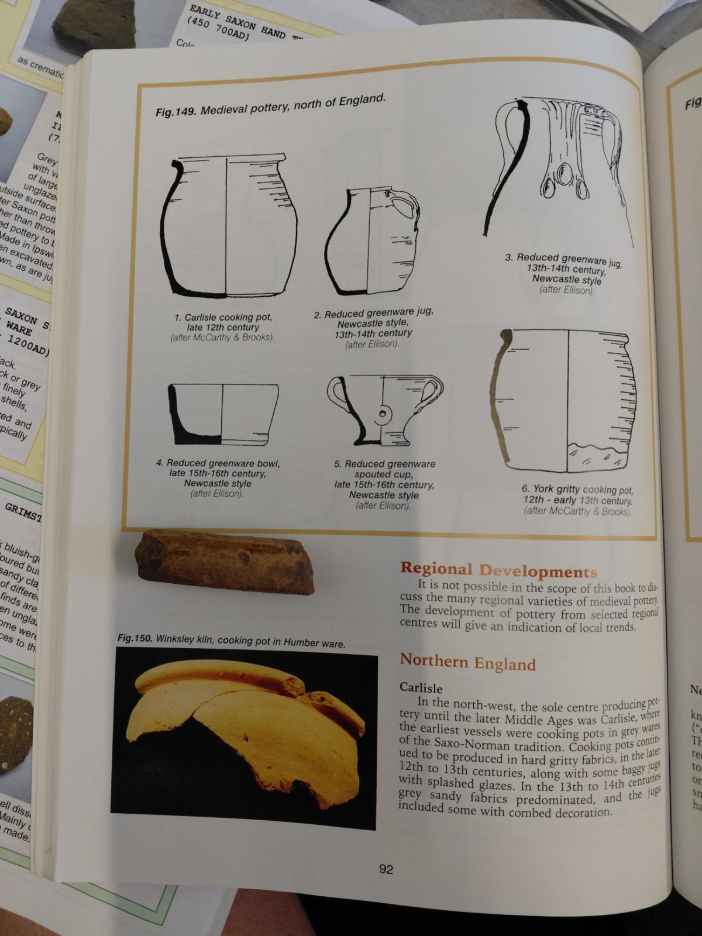
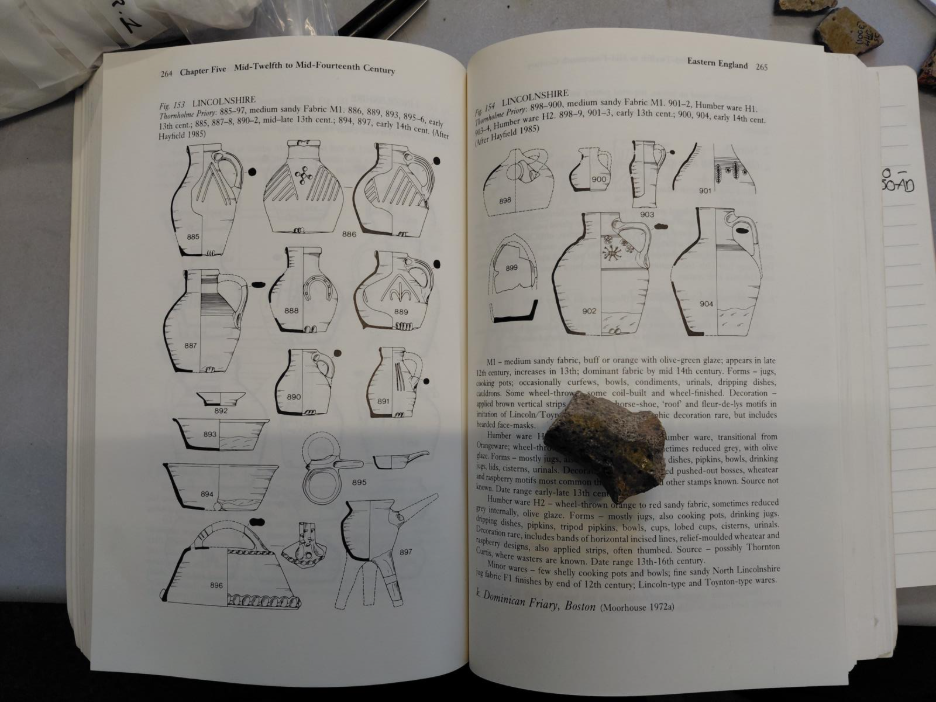
We still have a bit of work to go, but even off the top of the noggin we can see several different styles and timeframes of Medieval and Post-Medieval pottery in our collection.
You know, people often ask me, “why do archaeologists care so much about pots?” (they tend to ask this after entering the 5th gallery in a museum stacked floor to ceiling with pots, and they usually use far more expletives, and then usually tell me they will meet me in the gift shop). The answer to that question is simple: They tell us so much stuff!
First of all, you can tell so much about the kinds of things people were doing through the kinds of pottery they were producing and using. Were they making beer or cheese? Was activity happening in communal workshops or private homes? What kind of technology did they have to make and fire their pots?
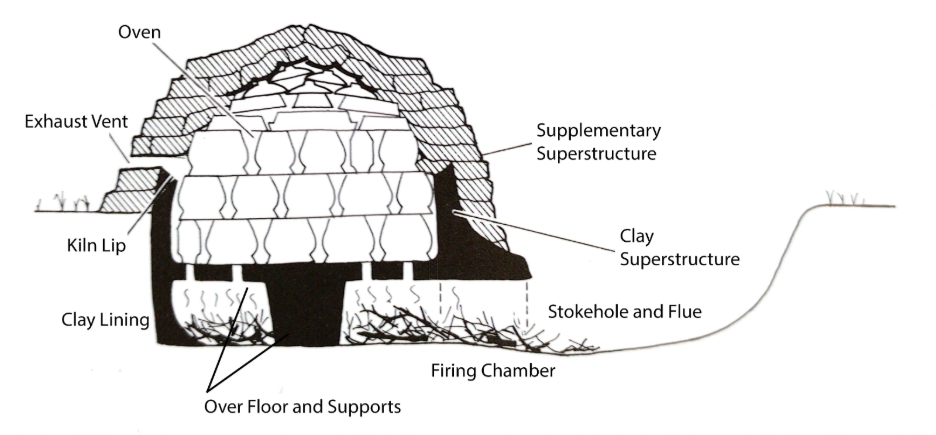
Caption: A roman Pottery Kiln from V. Swan (1984). The Pottery Kilns of Roman Britain.
Technology such as kilns can tell you about other industries as well, like metal working and fuel sourcing. It can also tell you how much time, money, and importance was given to particular industries; were people taking days to paint epic battle scenes on their wine jugs or where they slapping some glaze on and calling it a day? What does that tell us about their priorities?
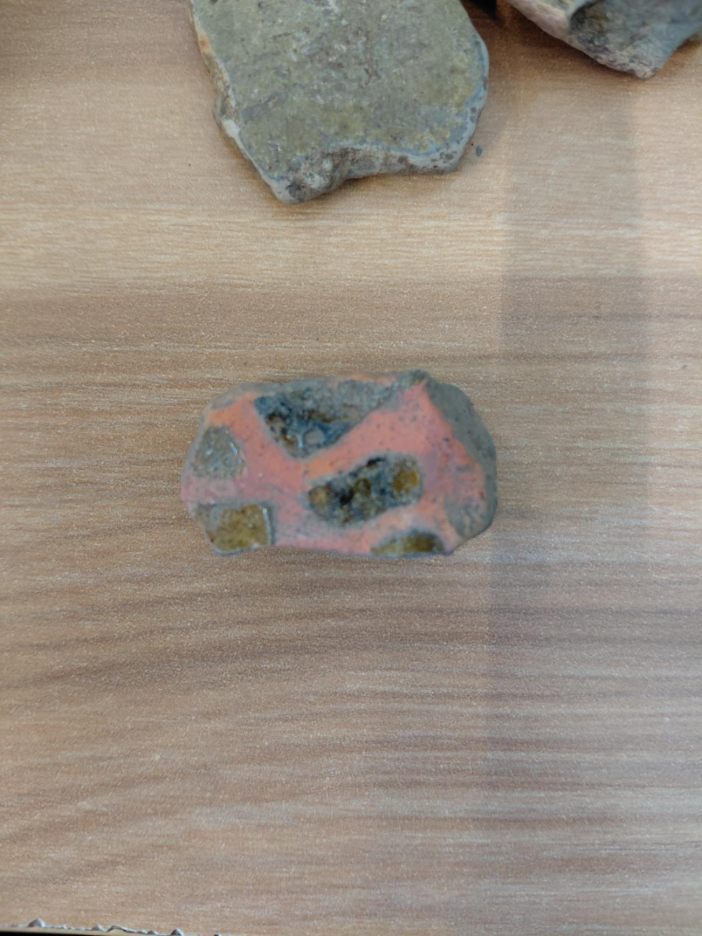
Caption: Medieval Splash-Glaze Pottery.
You can tell a lot about the vibes of a society through the decorations on their pottery. Did they reproduce stories on their pottery? Did they prefer realism or abstract symbols? Does decoration denote status or possible ceremonial use?
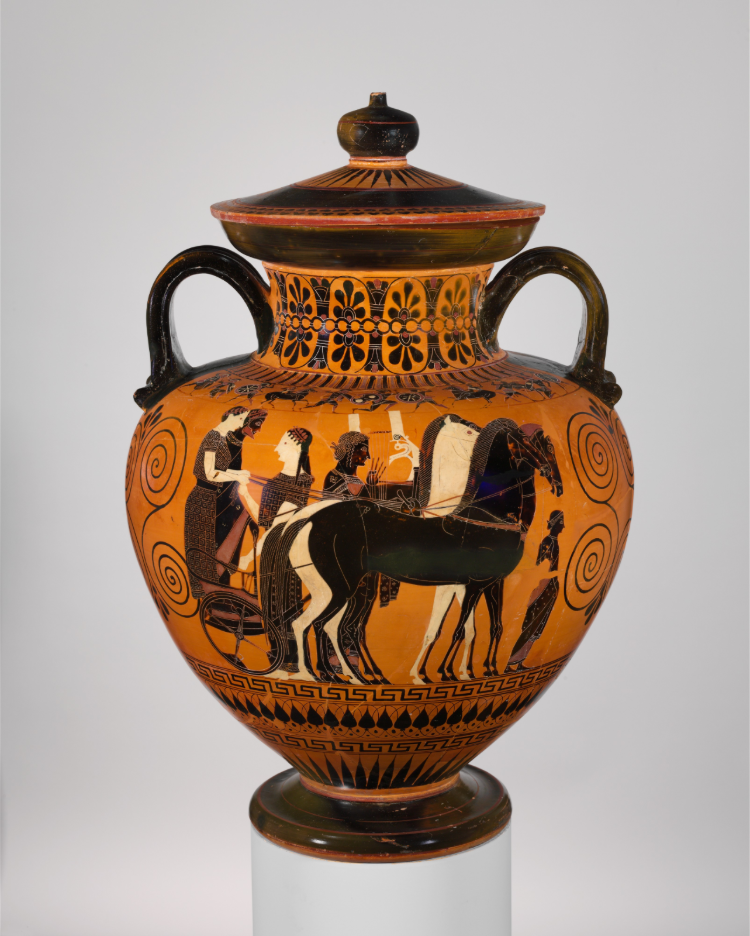
Caption: Terracotta neck-amphora with lid and knob (27.16), ca. 540 B.C., Attributed to Exekias. Metropolitan Museum of Art.
Depictions of people and mythical characters from Ancient Pottery can give us clues to how people dressed and styled their hair, and how the world around them might have looked. Whereas the geometric designs found on Neolithic Grooved ware indicates that pottery production was a more tactile industry, and that decoration in the Neolithic likely had an abstract, possibly even symbolic reference.
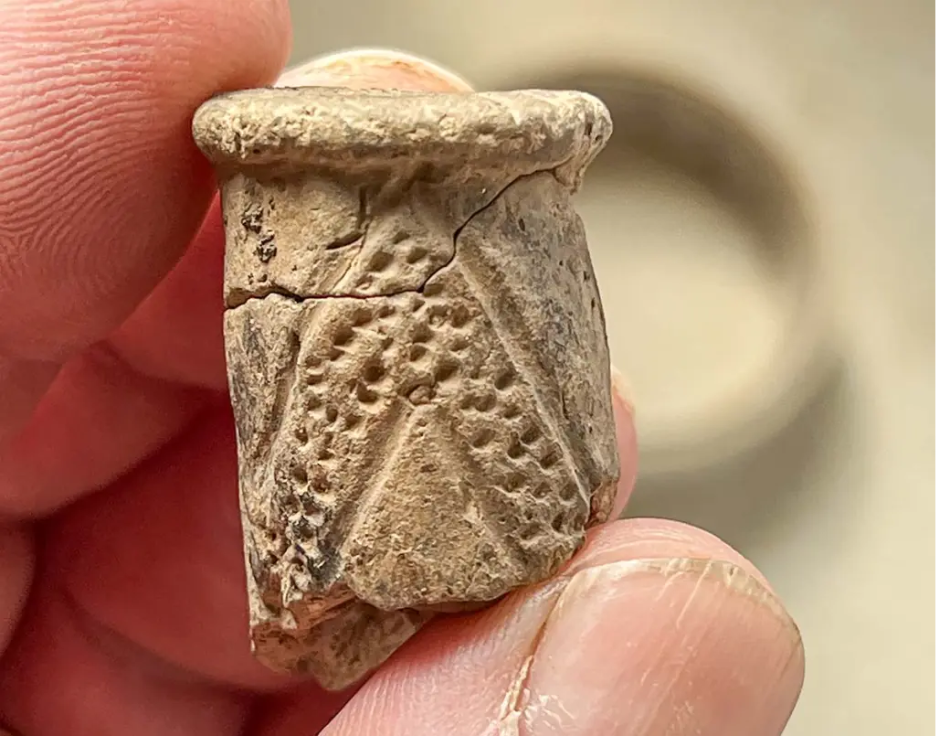
Caption: ‘Needled’ decoration on one side of the clay artefact. (Sigurd Towrie). Image from Dig Diary – clay artefact’s decoration reignites our sense of awe and wonder – The Ness of Brodgar Project
Pottery can tell us about resource availability from what it is tempered with and even the impressions of reed mats on bases.
And it gets better!
Pottery is incredibly porous, meaning that it soaks up a little bit of everything that it contains. Through Organic Residue Analysis we can see what people were eating thousands of years ago. Lipids, compounds found in fats, are the most easily recovered archaeological biomarkers, and can give us rare and valuable insight into what people are eating and making. For example, researchers from Goethe University working with chemist from the University of Bristol, were able to use Organic Residue Analysis to identify Beeswax residue in 3500 year old pottery sherds produced by the Nok culture of central Nigeria. This is the oldest example of honey gathering in Africa.
So yeah, I would say that pots are pretty cool.