
We’re on holiday this week at JAMHQ (kind of), so this week we have a little explanation of something that was touched on in last week’s update; wet sieving. Wet sieving. Wet sieving is part of an archaeological sub speciality Environmental Archaeology, which aim is to examine the ways in which the relationships between different human societies and the landscape by researching past environments, diets, and landscapes through scientific methods.
The most common way archaeologists achieve this is through a process of environmental sampling, wet sieving or floatation of those samples, collection of the different material left and examining it to identify environmental or dietary evidence, sometimes with the use of things like microscopes.
In the context of JAM, we only had two bulk environmental soil samples last year, as we only had two tiny features that were potentially old enough to make it worthwhile going through the Environmental process.
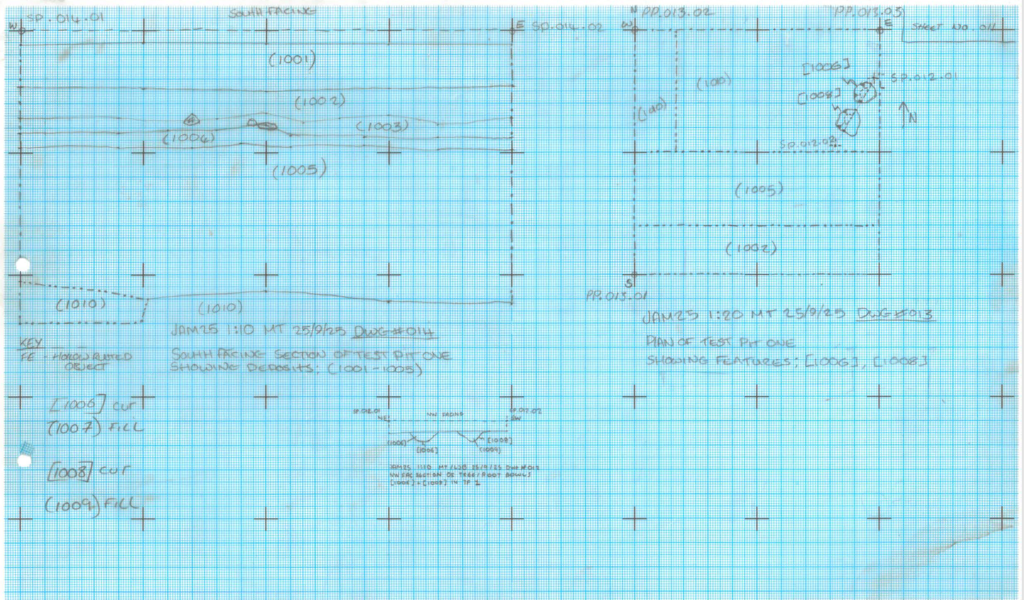
Caption: Plan and Sections drawing of root bowls [1006] and [1008]
These features were found at the bottom of Test Pit 1 last year, at a depth of 1.20m, making them potentially archaeologically relevant to the monastic site. We decided to Bulk sample them, which would usually mean taking four 10 litre buckets of soil analyse. However these root bowls were so tiny, we were able to fully excavated them and put the soil in two tiny finds bags. A bulk sample just means that you are taking a large, general sample of a context, whereas a spot sample is a small, specific sample of something with a particular question in mind, such as a sample of ash and charcoal from a small fire.
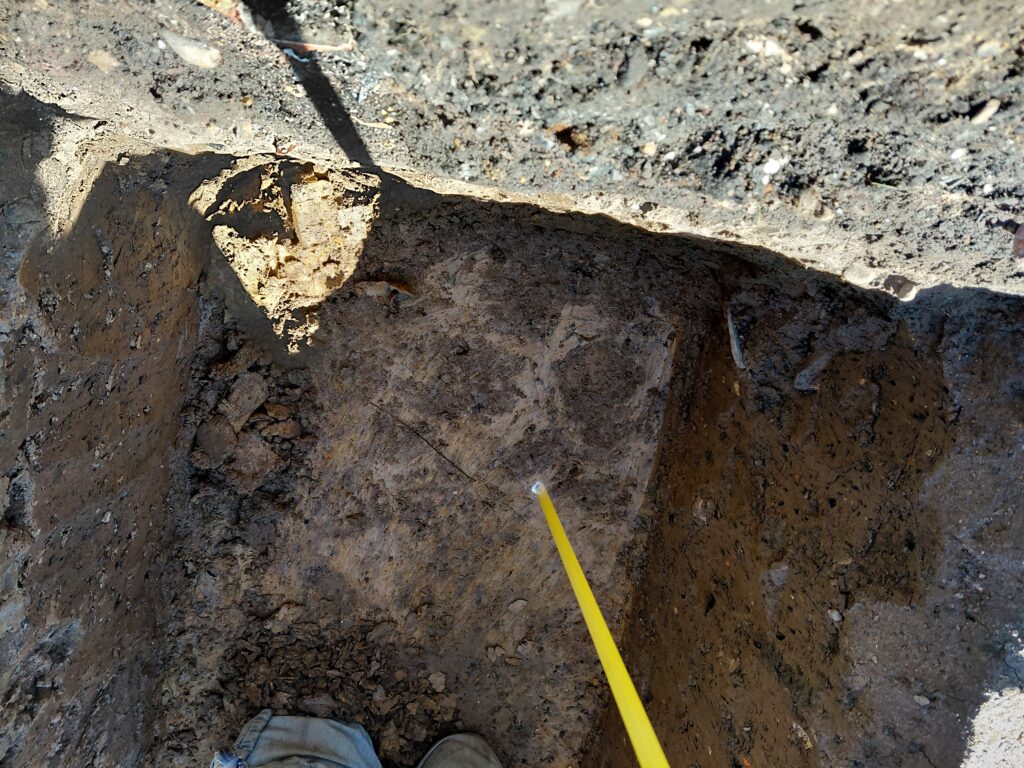
Caption: Test Pit 1
After we had taken the samples, we wet sieved them. Wet sieving, simply put, is washing you sample in a barrel with a spout, over a thin mesh so that the heavy things sink and are caught while the lighter things float out the spout and are caught in another sieve bellow this.
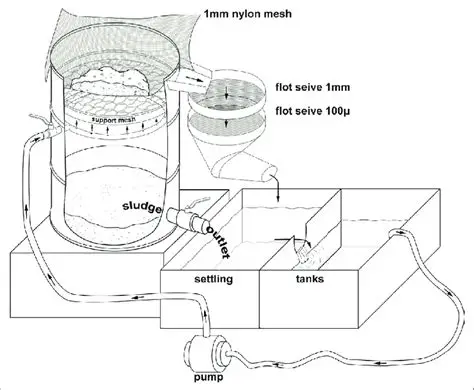
Caption: diagram of a floatation Tank (Drawing J. Herbst, available at Diagram of a flotation machine. Drawing J. Herbst. | Download Scientific Diagram).
The types of flotation tanks used by commercial archaeological units and universities tend to be massive, often with multiple stepped sections to allow for proper material collection. Ours was a £1 bucket from B&Q and my pasta sieve from home (it was put in the dishwasher before returning to my kitchen, it’s perfectly clean).
The residue that was left was set to dry before being examined by our volunteers under the microscope. I will admit, we were sceptical that we would find anything, but the results were actually fascinating.
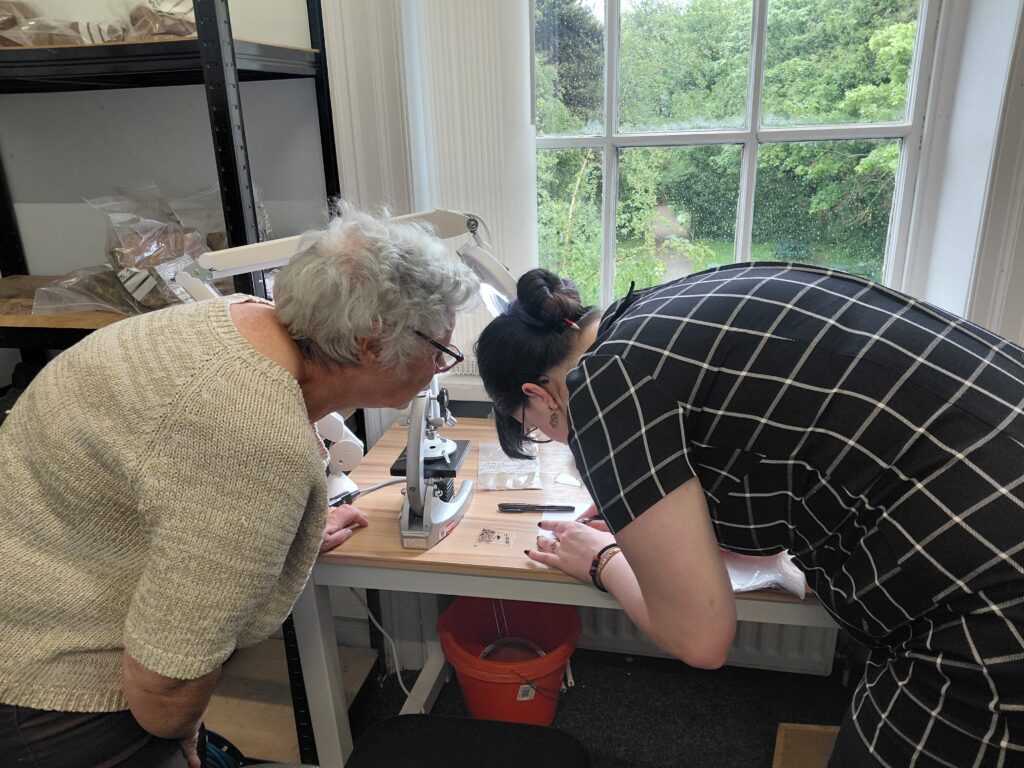
Caption: checking samples under our microscope.
Through the microscope we were able to identify fragments of metal ore and even ochre.
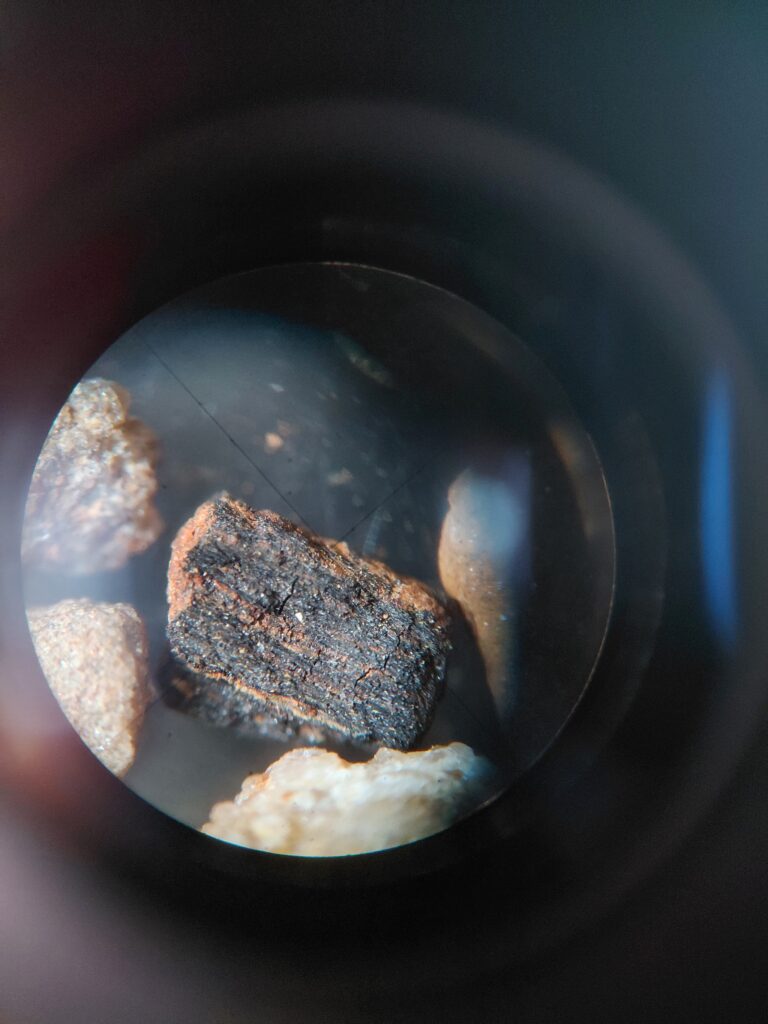
Caption: a tiny fragment of metal ore.
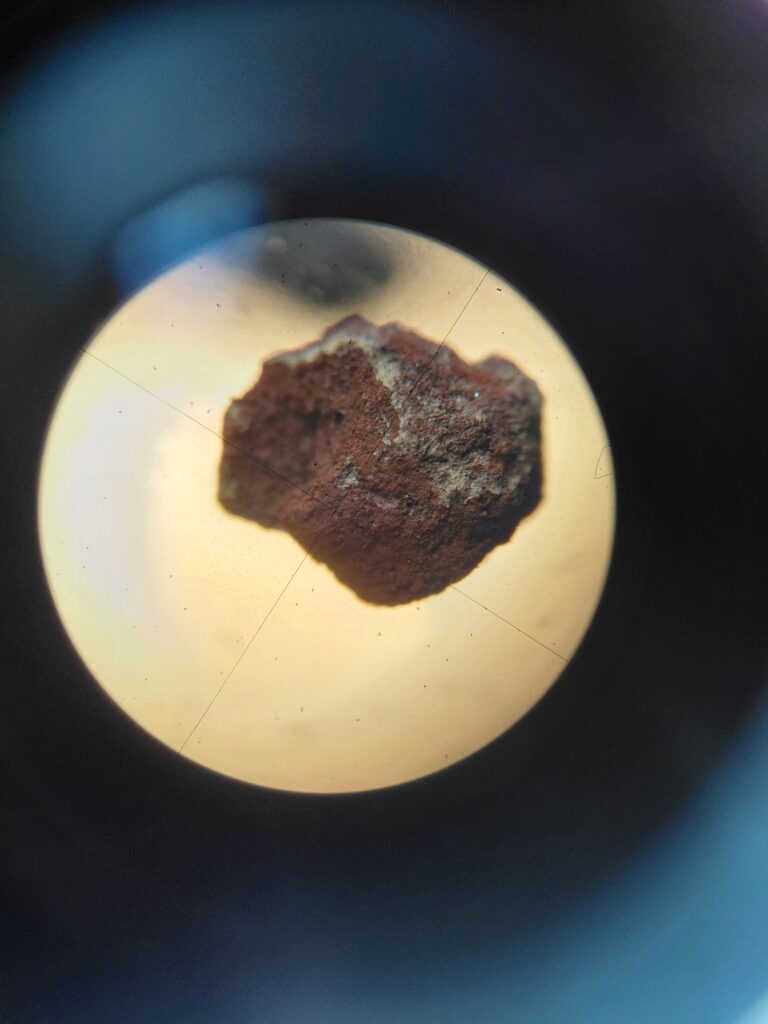
Caption: a fragment of possible red ochre.
Now these might well be naturally occurring, but what really got us excited was a few microscopic fragments of slag.
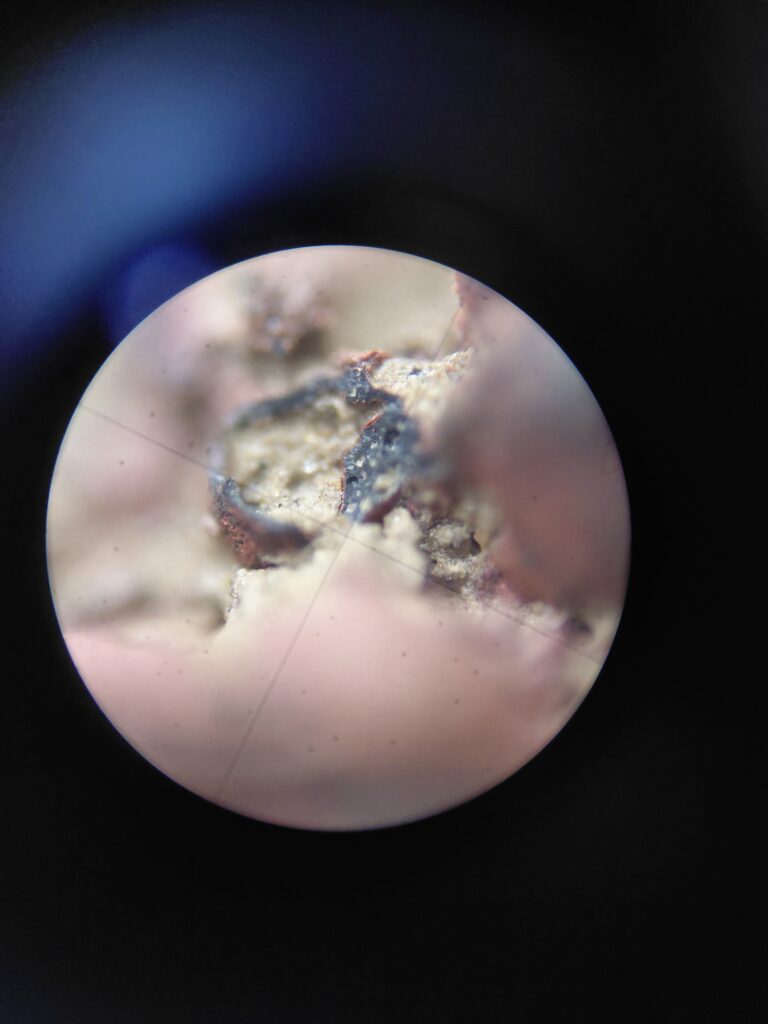
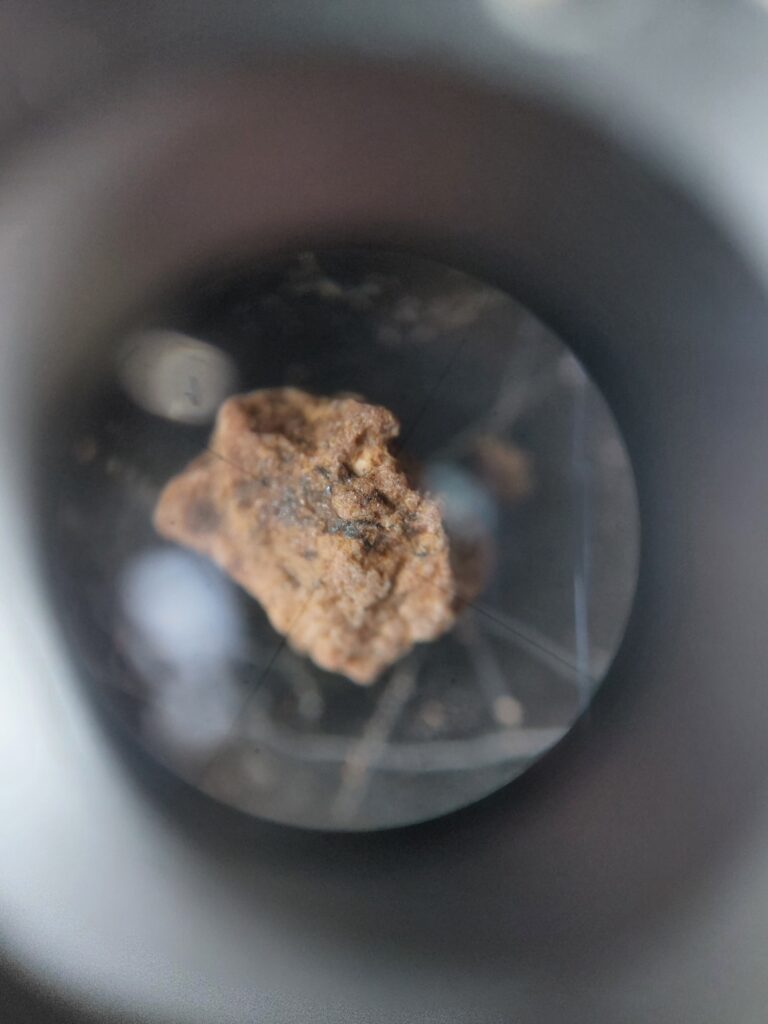
Caption: tiny fragments of metal working waste, or slag.
This material can only be manmade, and though it is possible that these pieces have precipitated down from higher levels, the thick yellow-brown clay capping these levels makes it unlikely. This means that these could well be the oldest archaeological material we’ve recovered from site so far, owing 5o the depth from which they were recovered. We also want to find out if the thick yellow-brown clay we dug through to recover these samples is the same thick yellow clay which Rosemary Cramp describes as capping the Norman Conquest deposits across some parts of site in her site report. If we can determine this, it would give us a secure date for the samples and edge them closer to the medieval period in date.
And thus concludes our brief intro to Environmental Archaeology. It is a far bigger subject than could ever be covered here, so if you are interested in the subject we would recommend the Historic England website for more resources.