
Hello and Welcome to this Weeks JAMCam, where we continue our adventure into the worlds of clay pipes. If you’re up to date on our updates, then you’ll know that last week we spent some time looking at our pipe collection and researching local manufacturers in order to understand where to start when dating the material. This week we took that a step further by splitting the pipes into a broad chronology.
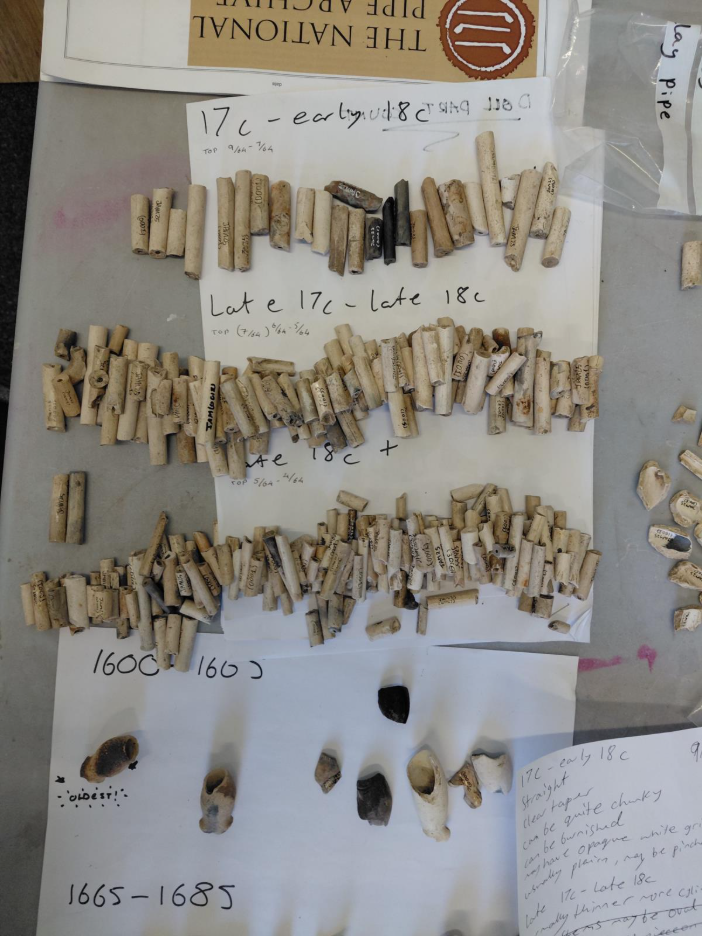
Caption: the ordered chaos of JAM HQ
We’ve done this in order to create a timeline for activity on or around the site. However, many of these pipes were found in the same context, which means we can have two pipes with a 100-year difference between when they were manufactured in the same stratigraphic layer. This has happened partly because the ground in the park has been churned up through use, mixing up objects and disrupting the stratigraphic sequence. It’s also partly due to the fact that much of the material included in the dark, ashy soil in the park has been brought over from somewhere else, perhaps the Old Jarrow Village. Regardless, creating a chronology for these pipes allows us to better understand the objects in our collection. By identifying the age of the pipes, where they were made and by whom, we can gain information about local trade, economy and consumption, as well as manufacturing in the area.
We started by reading some of the existing literature on clay pipe identification and discovered that clay pipes can be dated based on their size and shape, material, and design, as well as the design of any stamps or decoration.
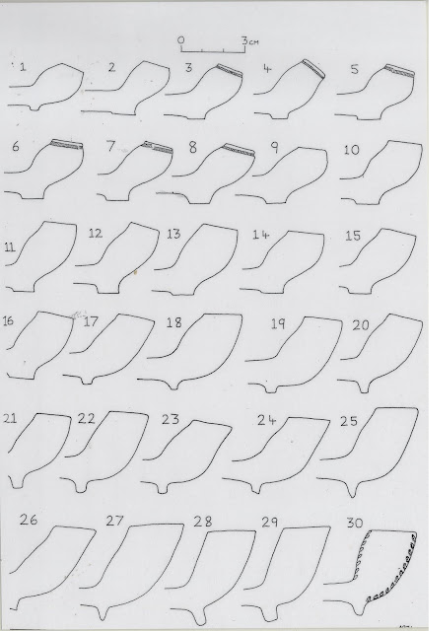
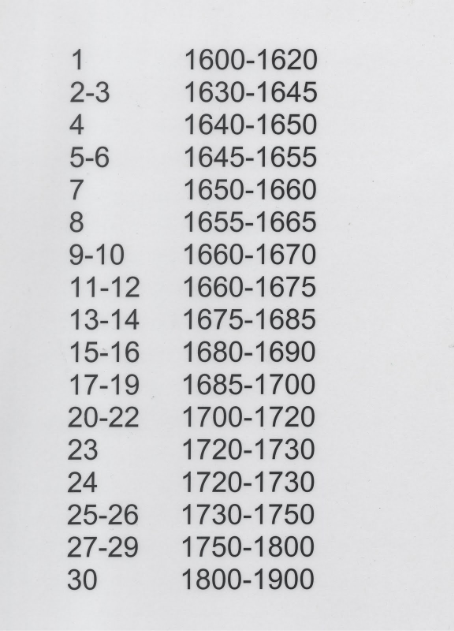
Caption: A chart of clay pipe types used for comparison with our own collection.
Working from the chronology above, we created four broad categories for the bowls; 1600-1665, 1665-1685, 1685-1730, 1730-1900. We decided on these dates as these are the points in which the designs of the pipes became sufficiently differentiable to split them into categories. Also, many of our pieces or broken or fragmentary, making it harder to be precise with dating. A true expert would also look at the size of the bore hole in the pipe, however this is measured is 64ths of an inch and honestly, without a pair of tiny calipers life is too short and our eyesight too precious.
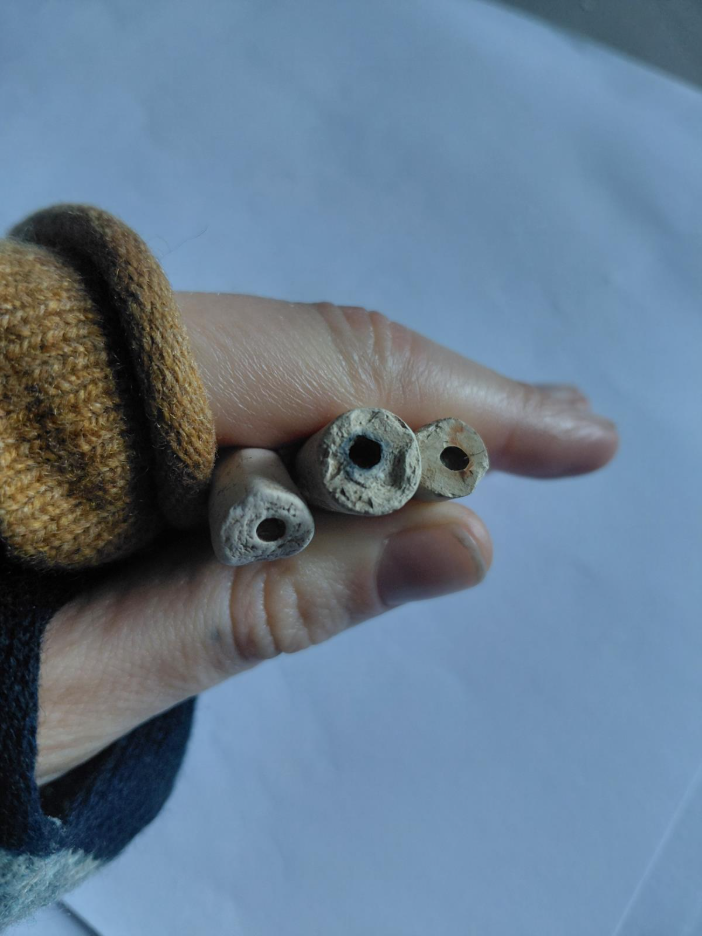
Caption: The bore holes of different clay pipes. They should be bigger in the ealier pipes, and smaller or narrower in the later pipes.
Despite this, by using our method of typological comparison we were able to identify the oldest pipe bowl in the JAM collection, likely dating from the early 17th century.
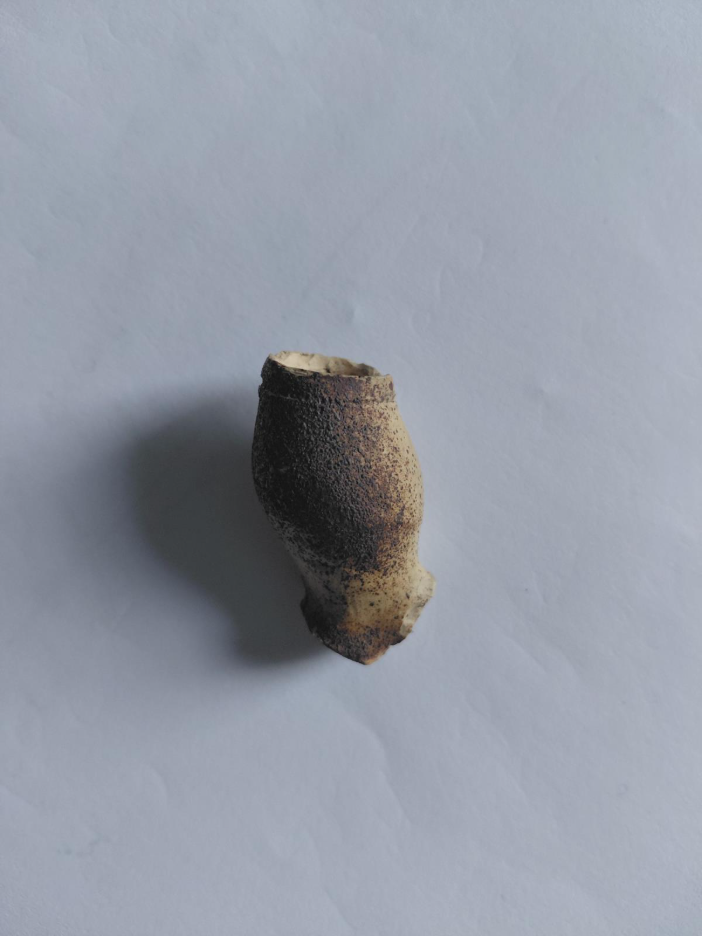
Caption: Behold! Our earliest clay pipe.
This was judged based on size, shape, and the flat based spur which was used for resting the pipe upright on a surface. We can see a circular stamp on the base of the spur, but unfortunately not enough detail has survived to make out a design or makers’ name.
As for the stems, we can separate them into three age brackets; 17th century to early 18th century, late 17th century to late 18th century, 18th century and beyond. Again, this is based on typology; on size, shape, whether they are glazed at one end, and what shape the mouthpiece is. Older pipes tend to be chunkier and taper towards the mouth piece, whereas more modern pipe stems were skinnier, sometimes curved, with a rounded mouthpiece.
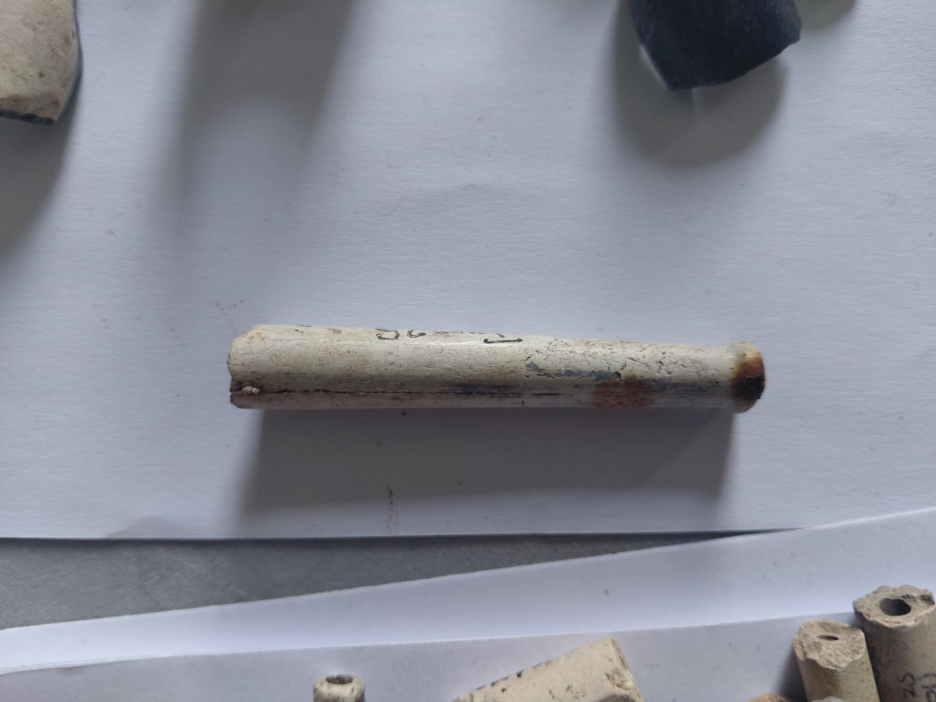
Caption: a later clay pipe stem with a rounded or ‘nipple shaped’ mouthpiece.
Decoration and makers marks are another important factor here as these often give us the name of the manufacturer and their location.
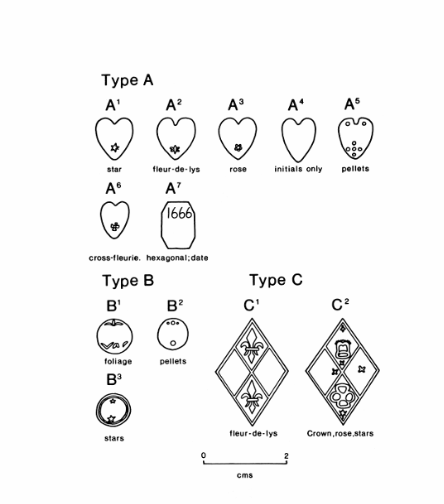
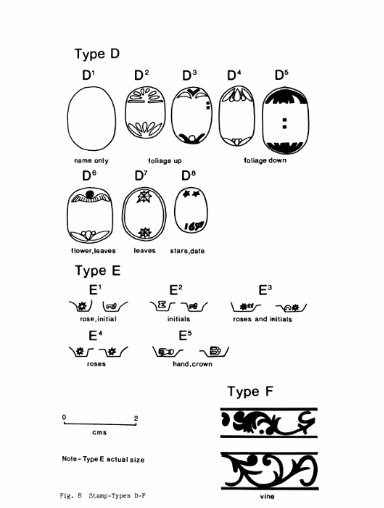
Caption: Tyneside Designs (Edwards, L. (1988). Seventeenth and Eighteenth Century Tyneside Tobacco Pipe Makers and Tobacconists. In Davie, P. (Eds.). The Archaeology of the Tabacco Pipe. BAR British Series (192), pp. 8-13.
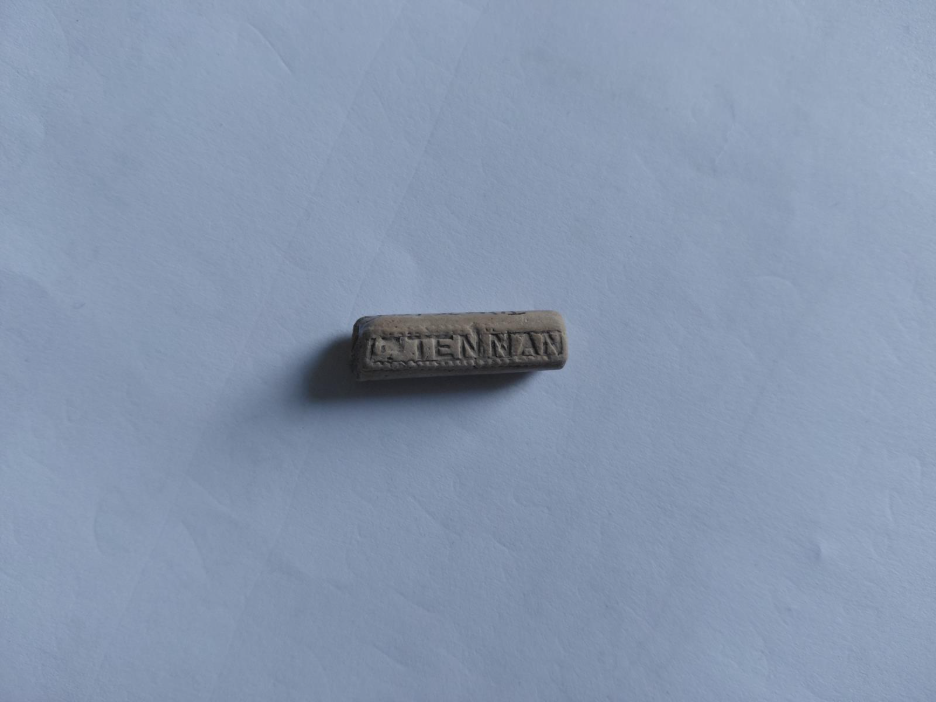
Caption: the stem of Tennants pipe with stamped and embossed decoration, c.19th Cent.
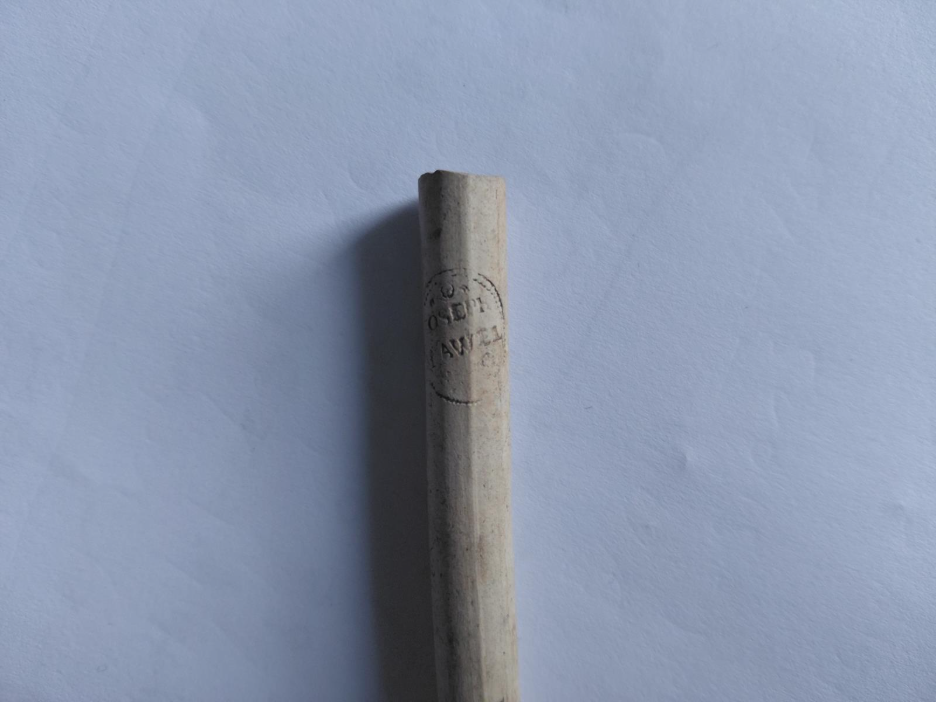
Caption: simple makers name in an oval stamp from a Joseph Fawel Pipe, c. 17th Cent.
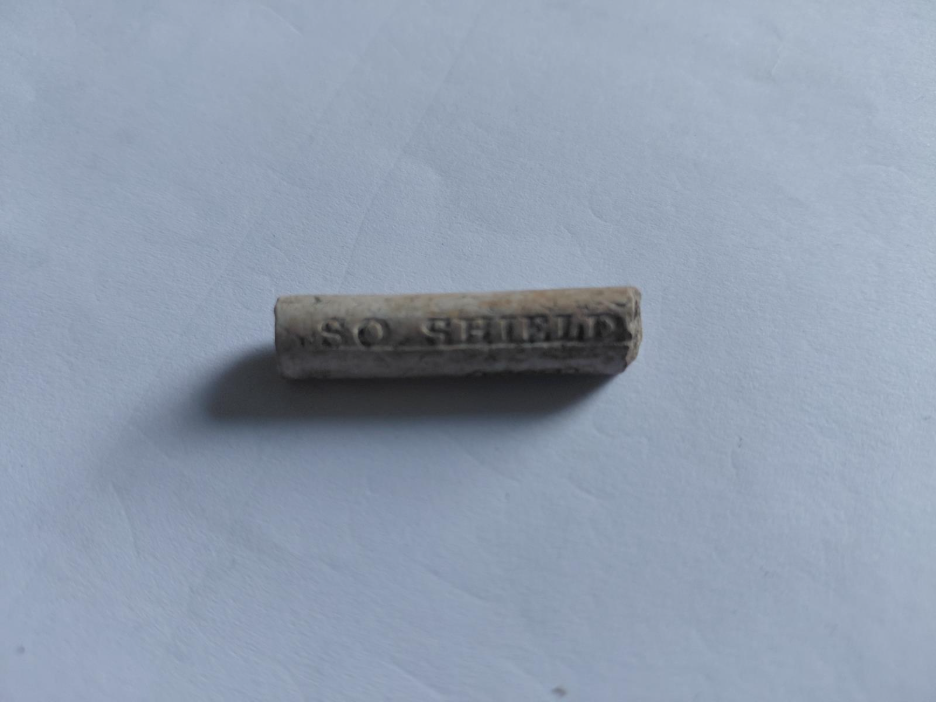
Caption: a pipe stamped with South Shields as a place of manufacture, c. 19th Cent.
Earlier pipes tend to just have the makers name in an oval stamp, whereas later pipes might have the town of manufacture as well as the makers name stamped or embossed. We do seem to have two mystery pipes though.
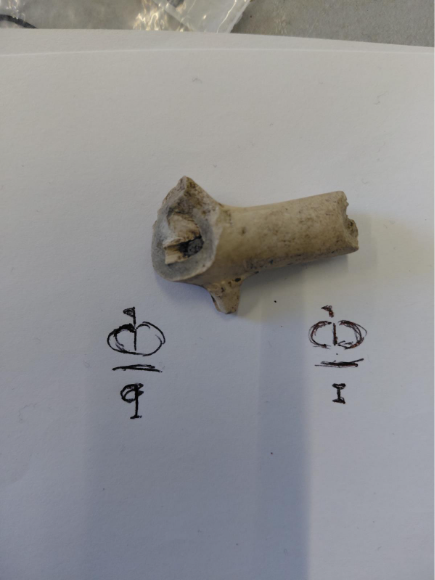
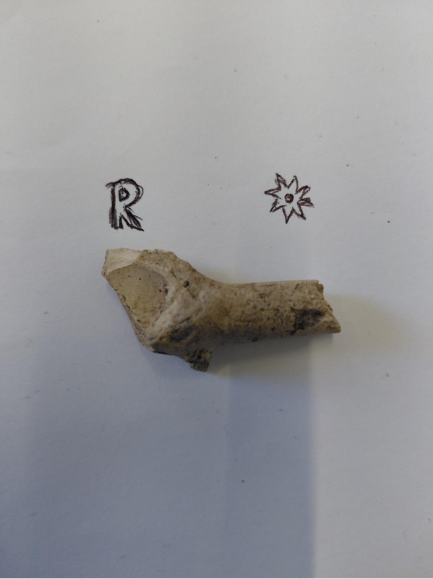
Caption: These two pipes have tiny, embossed designs on either side of the spur, presumably the makers’ initials or mark.
We’ve been wracking our collective brain trying to figure out what these marks mean. Many manufacturers would put their initials or a small design on the spur to identify themselves, but we can’t seem to find a matching example for either of these two that’s just right.
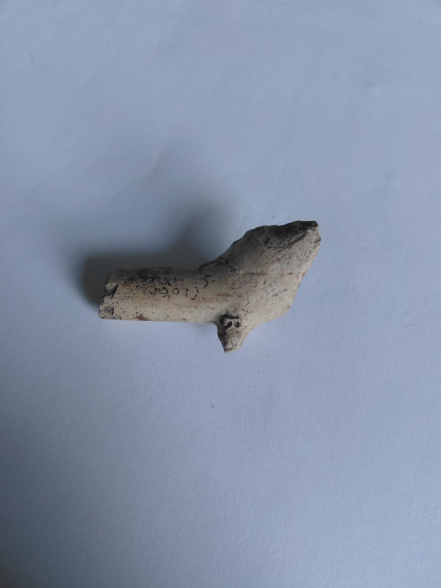
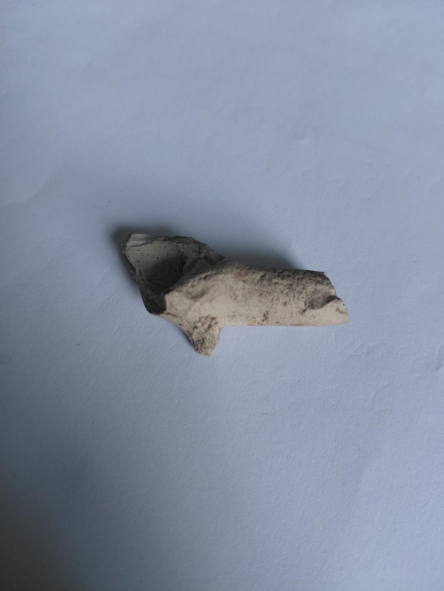
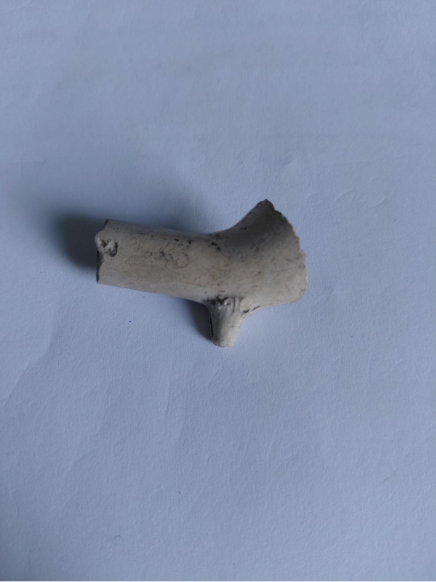
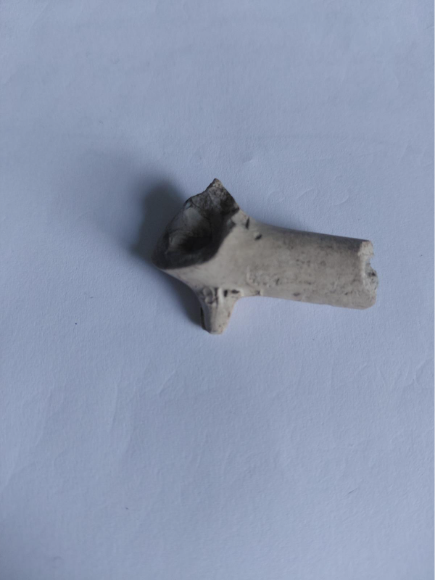
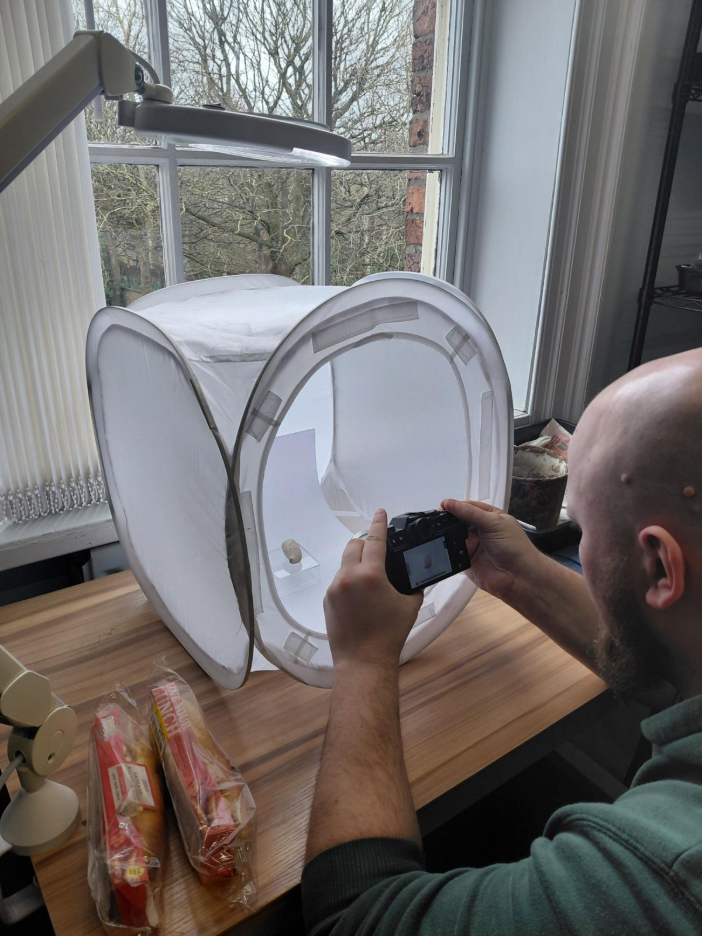
The next stage in this process is photography. We’re learning how to take high quality photographs that might be suitable for publishing. We want to be able to write about our clay pipe collection in reports and maybe even articles one day, so learning the right techniques to take publication level photos is a must.
And here are some of the result…
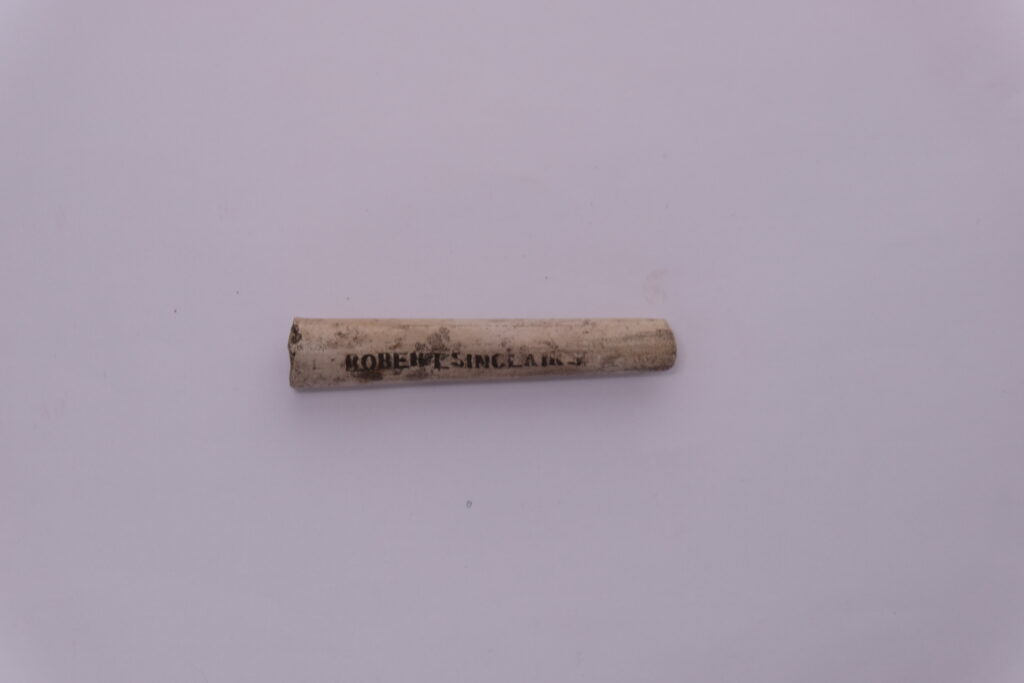
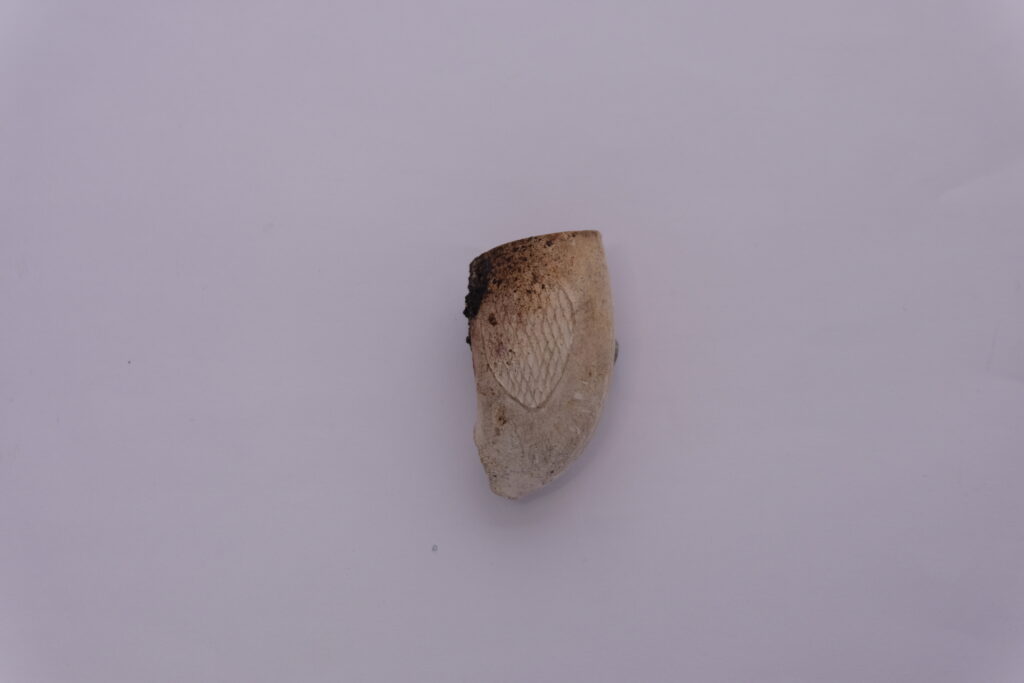
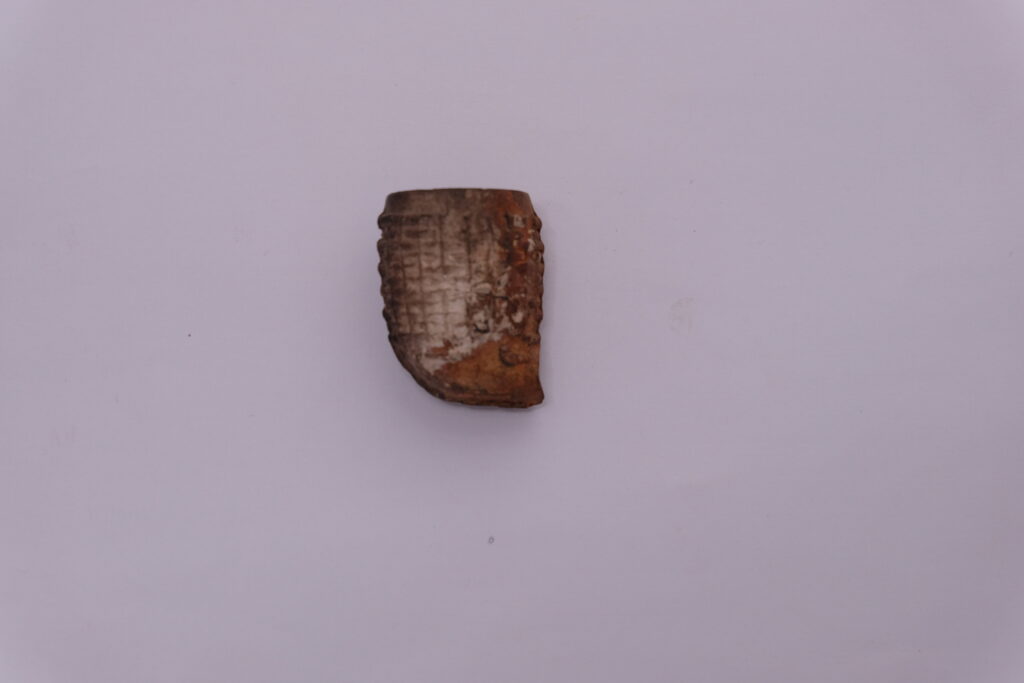
Pretty good for a first go.