
Hello and welcome back to our spotlight series, picking up with our second spotlight of the year. This time we are highlighting our incredible JAM project and learning more about what archaeology is really like.
So what is JAM? JAM stands for Jarrow Archaeological Mission. This project, made possible by the National Lottery Heritage Fund, is helping us explore more of Jarrow’s history. It reopens excavations around the Jarrow monastic site for the first time since Dame Professor Rosemary Cramp’s excavations in the 1960s and 1970s.
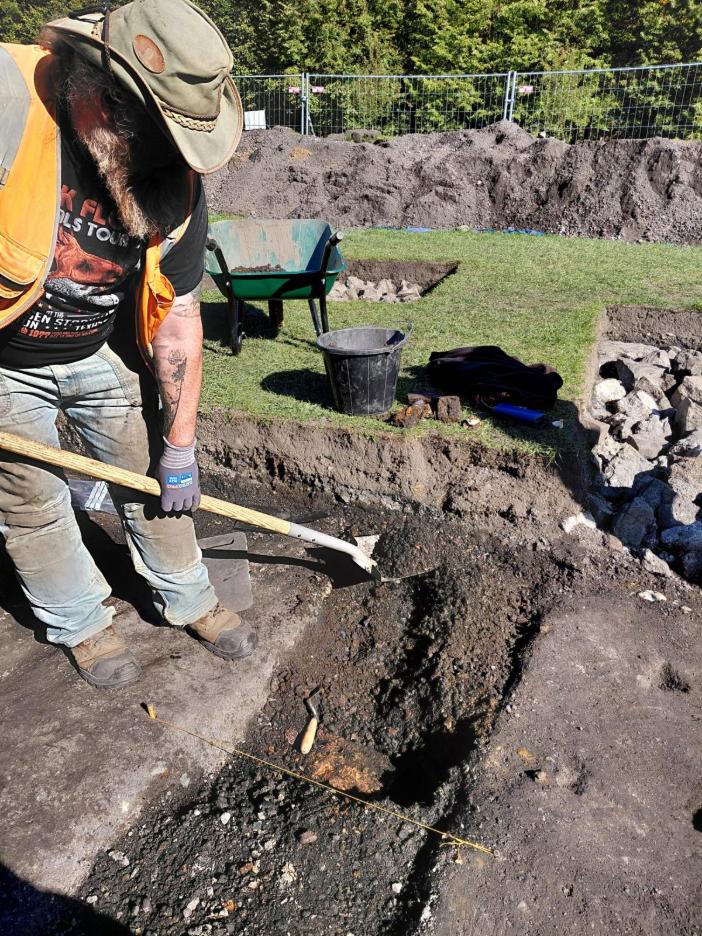
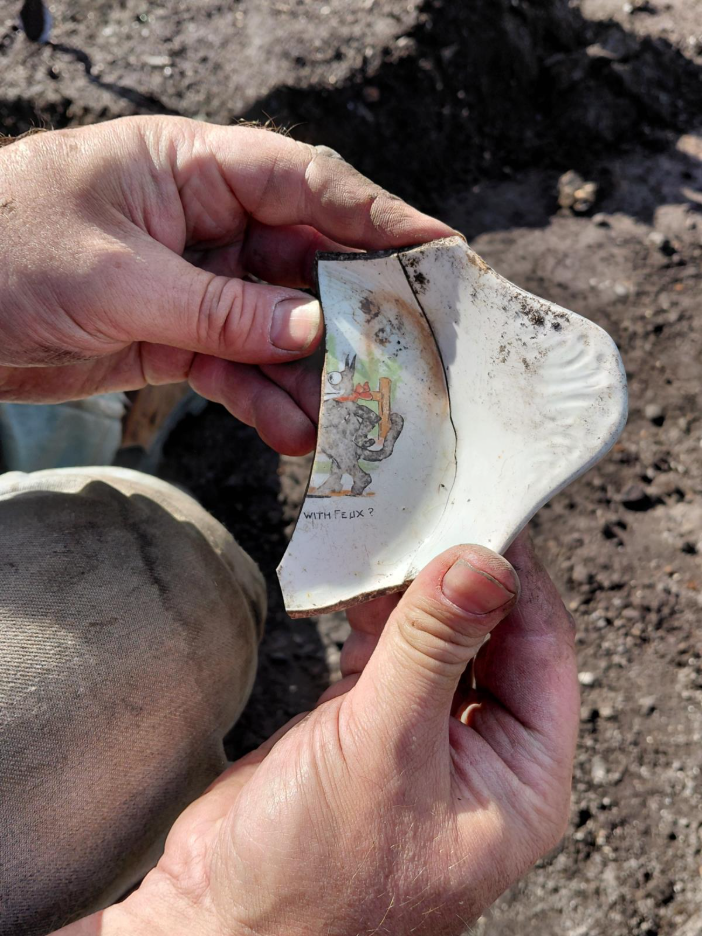

The first season of digging finished this summer, and the team is hard at work processing and recording the finds. The excavations have been led by our Research, Learning and Education Service Manager Dr. Marco Romeo-Pitone and Archaeology Coordinator Lucy McLay. The archaeologists have been joined by community groups, volunteers, residents and students during the exavations.
If you would like to learn more about JAM, click here to read more and see our JAMCam posts with updates about the project.
This spotlight is to shine a light on the project and about archaeology in general. All of the objects shown in this spotlight are from Archaeology Coordinator Lucy McLay’s tool bag. She always carries this with her when out on excavation.

The first object is Lucy’s trowel. This is one of the most common objects archaeologists use on excavations. It’s one of the most important tools in their kit. Archaeologists use trowels for carefully removing soil. This lets them excavate artefacts without damaging them. It also lets archaeologists dig without disturbing the layers in the soil. We call these layers stratigraphy, and they are very important to archaeologists. The stratigraphy of the soil helps archaeologists understand the history of a place as well as know how old objects are and where they came from.

Archaeologists will often use their trowels until they are completely worn down. In fact, it is a point of pride to have a trowel that has been used so much it is worn until the blade is very small. Sort of like using a pencil and sharpening it until it is too small to use anymore!

Next up is this collection of brushes. Brushes are for gently brushing away soil. This allows them to remove and clean objects without damaging them, especially if they are fragile. Archaeologists can also use them to brush away loose soil to clean up an area when excavating to make sure everything looks clearer for photographs and recording. They are good for very delicate work.

This is Lucy’s spirit level. When excavating, archaeologists have to take lots of measurements and record things very carefully. This is important for understanding an archaeological site and making sure that where artefacts were found is properly recorded. The spirit level helps archaeologists to make exact, precise measurements. This means they can plot their measurements properly.

Next up is Lucy’s pencil case. It contains pencils, pens, rubbers, a pencil sharpener, a torch and a compass. Archaeologists always need to carry pencils with them on excavation. This is because archaeologists make lots of notes and drawings while excavating so they can record everything they do. A compass is important because when drawing or recording their work, archaeologists need to know what direction everything is facing. The torch is used to help see things more clearly if Lucy wants to see the details of something that is hard to spot or there is not much light.

This little bag contains little pegs which Lucy uses to set up lines and grids with string. These help archaeologists measure and accurately draw the area they are excavating and the layers of soil. Having a grid also helps archaeologists to divide up the space they are working in so it is easier to manage, and means they can more precisely record where an artefact was found as they can list which square of the grid it was found in.

This is builder’s line. Archaeologists use it with the pegs for making lines and grids. The spirit level helps to make sure the lines are straight and accurate. As you can tell, it is very important for archaeologists to make sure that they record everything accurately and in as much detail as they can! The more they know about what they found and the site where they found it, the more they can learn about the past.


These are Lucy’s sunglasses and lip balm. Archaeologists work outside all day throughout the year and in lots of different weather conditions. It is very important that they take care of their bodies while working outside. They will often carry things like sunscreen, sunglasses to protect their eyes from the sun or a hat to prevent sunburn. They may also carry lip balm so their lips don’t chap. And almost every archaeologist will tell you how important it is to have a good set of waterproof clothes!

Our final object is this plastic toy dinosaur tail. It looks a little like an animal horn. On one excavation Lucy was working on, an archaeologist found this. The team thought it would be funny to hide it in one another’s trenches! Lucy kept this as a memento.
We hope you enjoyed this spotlight! Feel free to visit our display case in the museum to learn more about these objects yourself. Archaeology is incredibly important for learning about the past, which helps us understand our world today and how we can make it better. It also helps us to feel connected to people who lived before us by preserving the things they used every day in their lives.
Keep an eye out for more about JAM soon! We can’t wait to see what Lucy and the team get up to next.